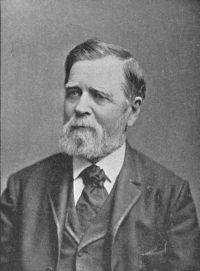
William Henry Burr

Biographical details

Portrait of William Henry Burr William Henry Burr Bacon and Shakspere

With all this confusion what are we to believe in regard to “Ignoto”? Was he sometimes Raleigh, sometimes Barnfield, sometimes Dyer, sometimes Greville,
and sometimes Shakspere, or some one else? Or was he a single person who “loved better to be a poet than to be counted so” and who affected to hoodwink the above-named Greville by writing to him in 1596: “For poets I can commend none, being resolved to be ever a stranger to them”?
And here let us note a bit of internal evidence that Bacon wrote the little poem in praise of the “Faery Queen” signed “Ignoto.”
Source: Gutenberg

Portrait of William Henry Burr William Henry Burr Bacon and Shakspere

Essex became master of the horse in 1587, and knight of the garter in 1588.
We proceed with the quotations from the Shaksperian Sonnets:
“Or I shall live your epitaph to make, Or you survive when I in earth am rotten, From hence your memory death cannot take, Although in me each part will be forgotten. Your name from hence immortal life shall have, Though, I once gone, to all the world must die; The earth can yield me but a common grave, When you entombed in men’s eyes shall lie.
Source: Gutenberg

Portrait of William Henry Burr William Henry Burr Bacon and Shakspere

In that of 1599 the first word “Come” is omitted, without which the song could hardly be sung. Other slight defects of measure appear in both. But the editor of Marlowe’s Works has carefully corrected the grammar and the measure. And we will sit upon the rocks, Seeing the shepherds feed their flocks, By shallow rivers, to whose falls Melodious birds sing madrigals. And I will make thee beds of roses, And a thousand fragrant posies, A cap of flowers and a kirtle Embroidered all with leaves of myrtle.
Source: Gutenberg

Get perspective with Kwize: daily news enlightened by great literature