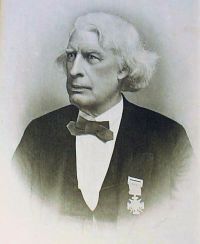
William Robertson Smith and Thomas Kelly Cheyne

Biographical details

William Robertson Smith and Thomas Kelly Cheyne 1911 Encyclopædia Britannica (1911)

On the other hand, the strict historical interpretation is beset with difficulties which modern interpreters have felt with increasing force, and which there is a growing disposition to solve by adopting in one or other form what is called the mythical theory of the narrative. But interpretations pass under this now popular title which have no real claim to be so designated. What is common to the “mythical” interpretations is to find the real value of the narrative, not in the form of the story, but in the thoughts which it embodies.
Source: Wikisource

William Robertson Smith and Thomas Kelly Cheyne 1911 Encyclopædia Britannica (1911)

EVE, the English transcription, through Lat. Eva and Gr. Εὔα, of the Hebrew name חַוָּה‎ Ḥavvah, given by Adam to his wife because she was “mother of all living,” or perhaps more strictly, “of every group of those connected by female kinship” (see W. R. Smith, Kinship, 2nd ed., p. 208) , as if Eve were the personification of mother-kinship, just as Adam (“man”) is the personification of mankind.
Source: Wikisource

William Robertson Smith and Thomas Kelly Cheyne 1911 Encyclopædia Britannica, Volume 15… (1911)

Other prophets of the same age speak much of dearth and failure of crops, which in Palestine then as now were aggravated by bad government, and were far more serious to a small and isolated community than they could ever have been to the old kingdom. It was indeed by no means impossible that Jerusalem might have been altogether undone by the famine caused by the locusts; and so the conception of these visitants as the destroying army, executing Yahweh’s final judgment, is really much more natural than appears to us at first sight, and does not need to be explained away by allegory.
Source: Wikisource

Get perspective with Kwize: daily news enlightened by great literature