Summary

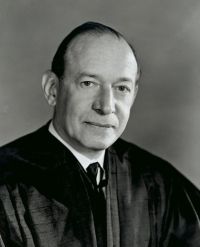
Portrait of Abe Fortas Abe Fortas Powell v. Texas (392 U.S. 514)…

The National Council on Alcoholism has defined 'alcoholic' as 'a person who is powerless to stop drinking and whose drinking seriously alters his normal living pattern.' The American Medical Association has defined alcoholics as 'those excessive drinkers whose dependence on alcohol has attained such a degree that it shows a noticeable disturbance or interference with their bodily or mental health, their interpersonal relations, and their satisfactory social and economic functioning.'↑ It ranks among the top four public health problems of the country.
Source: Wikisource

Portrait of Abe Fortas Abe Fortas Powell v. Texas (392 U.S. 514)…

But here the findings of the trial judge call into play the principle that a person may not be punished if the condition essential to constitute the defined crime is part of the pattern of his disease and is occasioned by a compulsion symptomatic of the disease. This principle, narrow in scope and applicability, is implemented by the Eighth Amendment's prohibition of 'cruel and unusual punishment,' as we construed that command in Robinson.
Source: Wikisource

Portrait of Abe Fortas Abe Fortas Powell v. Texas (392 U.S. 514)…

The findings in this case, read against the background of the medical and sociological data to which I have referred, compel the conclusion that the infliction upon appellant of a criminal penalty for being intoxicated in a public place would be 'cruel and inhuman punishment' within the prohibition of the Eighth Amendment. This conclusion follows because appellant is a 'chronic alcoholic' who, according to the trier of fact, cannot resist the 'constant excessive consumption of alcohol' and does not appear in public by his own volition but under a compulsion' which is part of his condition.
Source: Wikisource

Get perspective with Kwize: daily news enlightened by great literature