Summary

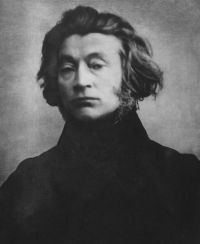
Portrait of Adam Mickiewicz Adam Mickiewicz The Undivine Comedy, and Other Poems (1875)

The Demon of political and warlike ambition then appears to him under the form of a gigantic eagle, whose wings stir him like the cannon's roar, the trumpet's call; he yields to the temptation, and the Guardian Angel pleads no more! He determines to become great, renowned, to rule over men: military glory and political power are to console him for the domestic ruin he has spread around him, in having preferred the delusions of his own excited imagination to the love and faith of the simple but tender heart which God had confided to him in the holy bond of marriage.
Source: Wikisource

Portrait of Adam Mickiewicz Adam Mickiewicz The Undivine Comedy, and Other Poems (1875)

To instill new life and hope into the disappointed man, the Angel ordains that a pure and good woman shall join her fate with his, and that innocent young souls shall descend and dwell with them. Domestic love and quiet bliss are the counsel of the heavenly visitant.
Immediately after the chant of the Angel, the voice of the Demon is heard seducing the Count from the safe path of humble human duties. The glories of the ideal realm are spread before him; Nature is invoked with all her entrancing charms; ambitious desires of terrestrial greatness are awakened in his soul
Source: Wikisource

Portrait of Adam Mickiewicz Adam Mickiewicz The Undivine Comedy, and Other Poems (1875)

Through the whole of this melancholy scene, only one human being manifests any deep moral feeling—a woman: a servant! Falling upon her knees, she prays the Holy Virgin to take her eyes, and place them in the sightless sockets of the young heir, her fragile but deeply-loved charge! Thus it is a woman of the people who, in the midst of the corrupt and dying society, alone preserves the sacred traditions of sympathy and self-sacrifice.
The cruel tyranny of Pancras and the mob is also full of important lessons.
Source: Wikisource

Get perspective with Kwize: daily news enlightened by great literature