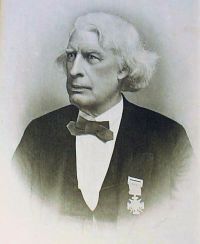
Albert Mackey

Albert Mackey

Summary

Portrait of Albert Mackey Albert Mackey The Principles of Masonic Law… (1856 | portal)

Nothing is to be taken for granted--categorical answers must be required to all that it is deemed important to be asked. No forgetfulness is to be excused, nor is the want of memory to be accepted as a valid excuse for the want of knowledge. The Mason, who is so unmindful of his duties as to have forgotten the instructions he has received, must pay the penalty of his carelessness, and be deprived of his contemplated visit to that society whose secret modes of recognition he has so little valued as not to have treasured them in his memory.
Source: Wikisource

Portrait of Albert Mackey Albert Mackey The Principles of Masonic Law… (1856 | portal)

I contend that a Mason is amenable for his conduct not only to the lodge of which he may be a member, but also to any one within whose jurisdiction he permanently resides. A lodge is the conservator of the purity and the protector of the integrity of the Order within its precincts. The unworthy conduct of a Mason, living as it were immediately under its government, is calculated most injuriously to affect that purity and integrity.
Source: Wikisource

Portrait of Albert Mackey Albert Mackey The Principles of Masonic Law… (1856 | portal)

No Mason, or no lodge, is bound to give pecuniary or other aid to a Brother, unless he really needs. The word "benefit," as usually used in the modern friendly societies, has no place in the vocabulary of Freemasonry. If a wealthy Brother is afflicted with sorrow or sickness, we are to strive to comfort him with our sympathy, our kindness, and our attention, but we are to bestow our eleemosynary aid only on the indigent or the destitute.
He must also be worthy. There is no obligation on a Mason to relieve the distresses, however real they may be, of an unworthy Brother.
Source: Wikisource

Get perspective with Kwize: daily news enlightened by great literature