Alfred Nutt

Alfred Nutt

Summary

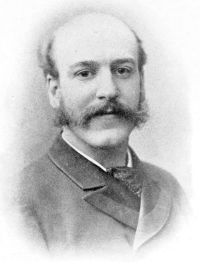
Portrait of Alfred Nutt Alfred Nutt,  Beside the fire (1890)

“ One and all well-nigh are profoundly tragic. The doom of Troy the great, the passing of Arthur, the slaughter of the Nibelungs, the death of Sohrab at his father's hands, Roncevalles, Gabhra, the fratricidal conflict of Cuchullain and Ferdiad, the woes of the house of Atreus; such are but a few examples of the prevailing tone of the hero-tales. Achilles and Siegfried and Cuchullain are slain in the flower of their youth and prowess. Of them, at least, the saying is true, that whom the gods love die young. Why is it not equally true of the prince hero of the fairy tale? ”
Source: Wikisource

Portrait of Alfred Nutt Alfred Nutt,  Beside the fire (1890)

“ For the folk-lorist the Gospel saying is thus more pregnant with meaning than for any other student of man's history—"the night cometh wherein no man may work." Surely, many Irishmen will take to heart the example of Dr. Hyde, and will go forth to glean what may yet be found of as fair and bounteous a harvest of myth and romance as ever flourished among any race. ”
Source: Wikisource

Portrait of Alfred Nutt Alfred Nutt,  Beside the fire (1890)

“ This I hold to be the vital lesson the folk-lorist may learn from considering the relations of Gaelic folk-tale and Gaelic romance (using the latter term in the sense of story with a conscious genesis) : that romance, to live and propagate itself among the folk, must follow certain rules, satisfy certain conceptions of life, conform to certain conventions. The Irish bards and story-tellers had little difficulty, I take it, in doing this; they had not outgrown the creed of their countrymen, they were in substantial touch with the intellectual and artistic laws that govern their subject-matter. ”
Source: Wikisource

Get perspective with Kwize: daily news enlightened by great literature