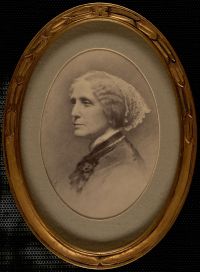
Anna Cabot Lowell Quincy Waterston

Anna Cabot Lowell Quincy Waterston

Summary

Portrait of Anna Cabot Lowell Quincy Waterston Anna Cabot Lowell Quincy Waterston The Atlantic Monthly (1866)

To women of any culture it was almost the only tangible form of creative art they could command, and the love of the beautiful implanted in their souls must find some expression. The great pattern-book of nature, filled with graceful forms, in ever-varied arrangement, and illuminated by delicate tints or gorgeous hues, suggested the beauty they endeavored to represent. Whether religious devotion, human affection, or a taste for dress prompted them, the needle was the instrument to effect their purpose.
Source: Wikisource

Portrait of Anna Cabot Lowell Quincy Waterston Anna Cabot Lowell Quincy Waterston The Atlantic Monthly (1866)

Whatever of skill or fame women have acquired through the ages in other departments, the nursery has ever been an undisputed sphere for woman's work. Nor have we reason to think that, in the centuries we have been considering, she was not faithful to this her especial province. The cradle of Henry V., yet in existence, is one of the best specimens of nursery furniture in the fourteenth century which have come down to us. Beautifully carved foliage fills the space between the uprights and stays and stand of the cradle, which is not upon rockers, but apparently swings like the modern crib.
Source: Wikisource

Portrait of Anna Cabot Lowell Quincy Waterston Anna Cabot Lowell Quincy Waterston The Atlantic Monthly (1866)

We are brought near to the presence of a woman of the Middle Ages when we stand beside the monument of Eleanor of Castile, queen of Edward I., in Westminster Abbey. The figure is lifelike and beautiful, with flowing drapery folded simply around it. The countenance, with its delicate features, wears a look of sweetness and dignity as fresh to-day as when sculptured seven hundred years ago.
Source: Wikisource

Get perspective with Kwize: daily news enlightened by great literature