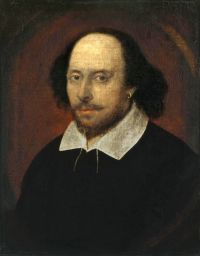
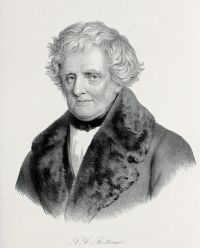
The Duke of Milan, a pivotal figure in the history of the Lombard League and Renaissance Italy, represents both political authority and artistic sponsorship. Scholars such as Ella Noyes emphasize his role as a forward-thinking leader whose architectural endeavors defined Milan’s legacy, while Julia Cartwright underscores his encouragement of artists such as Leonardo da Vinci and Bramante, elevating the city to a center of Renaissance ingenuity.
Maurice Hewlett provides a more personal depiction, revealing the Duke’s human frailties. These differing viewpoints portray a leader who was shrewd in diplomacy yet profoundly committed to the arts, mirroring Milan’s dual character as a center of governance and a birthplace of artistic brilliance. The Duke’s impact persists through the convergence of politics, beauty, and historical remembrance.
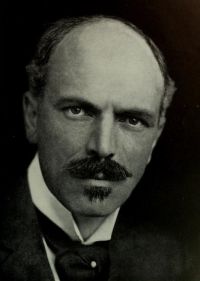 Maurice Hewlett,
Brazenhead in Milan — Chapter III
(1909)
Maurice Hewlett,
Brazenhead in Milan — Chapter III
(1909)