Summary

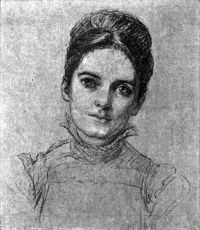
Portrait of A. Mary F. Robinson A. Mary F. Robinson The End of the Middle Ages: Essays and Questions in History

Every tie, indeed, united to detain Gregory in Provence. He was no ascetic, indifferent to glory or to comfort; but an affectionate, natural man, loving his ease, loving his family, loving the land where he was born. At Avignon he dwelt among his friends, his kinsmen, his father the Comte de Beaufort, his mother, his four sisters. The stories of his Cardinals could only add to his own horror of that distant Italy whose language he could not speak. He was ill, and he dreaded the miasma of Rome; he needed the comforts of that Court whose luxurious memory should long survive in France.
Source: Gutenberg

Portrait of A. Mary F. Robinson A. Mary F. Robinson The End of the Middle Ages: Essays and Questions in History

Valentine of Milan with her fairy splendours, her subtle wisdom, her Lombard traditions—Valentine, with the Visconti snake on her escutcheon—must have seemed to these Parisians much such another mysterious serpent-woman, another Mélusine. For the Italian character, never fanatic and yet so prone to spiritual passions; seldom bestial, yet so guilty of unnatural vices—Italy has ever been a mystery, a hateful enigma to the practical French; and of all Italians the Lombards, the border people, are most unlike their Gallic neighbours.
Source: Gutenberg

Portrait of A. Mary F. Robinson A. Mary F. Robinson The End of the Middle Ages: Essays and Questions in History

If to-day we see religion mask itself as devotion to humanity, it is but the reversal of the great masquerade of the Middle Ages, when whatever impulse of good-will to man was destined to survive assumed for safety’s sake the garb of the Church. Benevolence, science, logic, philosophy, and all the arts put on the hood and cowl. And the time came when love also entered religion. Indeed, the convent was the one safe place of refuge in a struggling, dark, chaotic world—a world for which centuries of careful nurture had ill-fitted the sentiment of love.
Source: Gutenberg

Get perspective with Kwize: daily news enlightened by great literature