Etienne Commines

Definition and stakes

Ruth Putnam,  Charles the Bold, Last Duke of Burgundy…

“ Such is Commines's narrative. Eyewitness [page 216] though he was, it must be remembered that when he wrote the account of this famous interview it was long after the event, and when his point of view was necessarily coloured by his service with Louis. Delightful, however, are the historian's own reflections that he intersperses with his plain narrative. To his mind the only period when it is safe for princes to meet is
"in their youth when their minds are bent on pleasure. Then they may amuse themselves together.
”
Source: Gutenberg

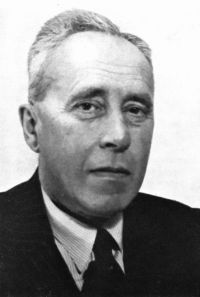
Portrait of Johan Huizinga Johan Huizinga,  The Waning of the Middle Ages (1924)

“ Among those who freed themselves from the chivalric illusion, seeing the misery and the falsehood of it, we must begin with those practical and frigid minds which were, so to say, opposed to it by temperament. Such were Philippe de Commines and his master, Louis XI. In describing the battle of Montlhéry, Commines abstains from all heroic fiction: no fine exploits, no dramatic turns; he only gives us a realistic picture of comings and goings, of hesitations and fears. ”
Source: Wikisource

Portrait of Charles Bémont Charles Bémont,  1911 Encyclopædia Britannica, Volume 6… (1911)

“ The first part was written between 1489 and 1491, while Commines was at the château of Dreux, the second from 1495 to 1498. Seven MSS. are known, derived from a single holograph, and as this was undoubtedly badly written, the copies were inaccurate; the best is that which belonged to Anne de Polignac, niece of Commines, and it is the only one containing books vii. and viii.
The best edition of Commines is the one edited by B. de Mandrot and published at Paris in 1901–1903.
”
Source: Wikisource

Get perspective with Kwize: daily news enlightened by great literature