Pavia

Definition and stakes

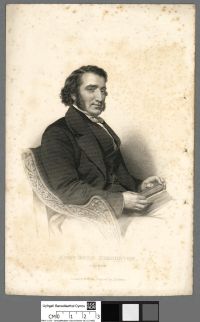
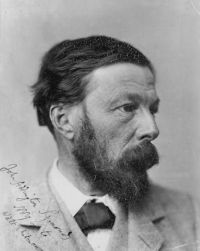
Portrait of Bayard Taylor Bayard Taylor,  Views A-foot; Or, Europe Seen with Knapsack and Staff

“ Near the gate on the road to Pavia, we passed a long colonnade which was certainly as old as the times of the Romans. The pillars of marble were quite brown with age, and bound together with iron to keep them from falling to pieces. It was a striking contrast to see this relic of the past standing in the middle of a crowded thoroughfare and surrounded by all the brilliance and display of modern trade.
Once fairly out of the city we took the road to Pavia, along the banks of the canal, just as the rising sun gilded the marble spire of the Duomo.
”
Source: Gutenberg

M. F. Mansfield,  Italian Highways and Byways from a Motor Car

“ Pavia was the Lombard capital from 572 to 774. Its old walls and ramparts remain, in part, to-day and the whole aspect of the town is one of a certain mediævalism which comports little with the modernity of its neighbour, Milan, which has so far outgrown its little brother.
Pavia’s Certosa, on the road from Milan to Pavia, is its chief architectural splendour. Of that there is no doubt.
”
Source: Gutenberg

Thomas Ashby,  1911 Encyclopædia Britannica (1911)

“ Pavia has a number of iron-foundries, military engineering and electrical production works, and other factories, as well as a large covered market, built in 1882. Pavia lies on the main line from Milan to Genoa (which crosses the Ticino by a bridge half a mile long, and shortly afterwards the Po) , with several branch lines. Barges from Pavia can pass down the Po to the Adriatic or to Milan by canal. Five miles north of Pavia is the Carthusian monastery of Certosa di Pavia, one of the most magnificent in the world. ”
Source: Wikisource

Get perspective with Kwize: daily news enlightened by great literature