Summary

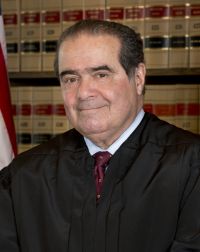
Portrait of Antonin Scalia Antonin Scalia City of Erie v. Pap's A. M. — Concurrence Scalia (2000)

Because the Pennsylvania Supreme Court severed the public nudity provision from the ordinance, thus rendering it inoperative, the city would be prevented from enforcing its public nudity prohibition not only against respondent, should it decide to resume operations in the future, and not only against other nude dancing establishments, but against anyone who appears nude in public, regardless of the "expressiveness" of his conduct or his purpose in engaging in it.
Source: Wikisource

Portrait of Antonin Scalia Antonin Scalia City of Erie v. Pap's A. M. — Concurrence Scalia (2000)

We have a sworn affidavit from respondent's sole shareholder, Nick Panos, to the effect that Pap's "operates no active business," and is "a 'shell' corporation." More to the point, Panos swears that neither Pap's nor Panos "employ [s] any individuals involved in the nude dancing business," "maintain [s] any contacts in the adult entertainment business," "has any current interest in any establishment providing nude dancing," or "has any intention to own or operate a nude dancing establishment in the future."
Source: Wikisource

Portrait of Antonin Scalia Antonin Scalia City of Erie v. Pap's A. M. — Concurrence Scalia (2000)

The Court adopts petitioners' line, concluding that because respondent is still incorporated in Pennsylvania, it "could again decide to operate a nude dancing establishment in Erie." Ante, at 287. That plainly does not suffice under our cases. The test for mootness we have applied in voluntary-termination cases is not whether the action originally giving rise to the controversy could not conceivably reoccur, but whether it is "absolutely clear that the...behavior could not reasonably be expected to recur."
Source: Wikisource

Get perspective with Kwize: daily news enlightened by great literature