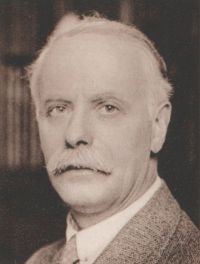
Arthur Mayger Hind

Arthur Mayger Hind

Summary

Portrait of Arthur Mayger Hind Arthur Mayger Hind Dictionary of National Biography… (1912)

Much of his spare time in the evenings while a student in Paris was spent in the art schools, and quite apart from his purely artistic inclination he was always a staunch advocate of the use of drawing in training the hand and eye of the surgeon.
Haden sought relaxation from his professional work of surgeon, which he pursued till 1887, in the art and study of etching. His etched work, although technically that of an amateur, is the chief memorial of his life. Except for a few plates after Turner, and some family portraits after Wright of Derby, his work is entirely original.
Source: Wikisource

Portrait of Arthur Mayger Hind Arthur Mayger Hind Dictionary of National Biography… (1912)

The revolution of 1830 meant the loss of many of his patrons, who had left Brussels at the crisis. Returning to England, he settled in London early in 1831, and for some time earned his living by doing drawings and lithographs for box lids, &c., for Ackerman and others, continuing to practise his painting of sheep and cattle in Regent's Park. His first exhibit at Suffolk Street in 1833 at once brought him into notice, and secured him a patron in Robert Vernon. He exhibited forty-eight pictures in all at the British Institution between 1833 and 1863.
Source: Wikisource

Portrait of Arthur Mayger Hind Arthur Mayger Hind Dictionary of National Biography… (1912)

He engraved a very large number of illustrations by Sir John Gilbert, who was his intimate friend and a constant travelling companion for water-colour sketching. He had taken up water-colour after 1840, having a few lessons from Collingwood Smith. He commenced to exhibit in 1844, and became a member of the New Water-colour Society (now the Royal Institute of Painters in Water-colours) in 1854. From 1859 he had a country house at Haslemere, but did not finally retire from his work in London until 1884. He died at Town House, Haslemere, on 7 April 1903, and was buried in Haslemere churchyard.
Source: Wikisource

Get perspective with Kwize: daily news enlightened by great literature