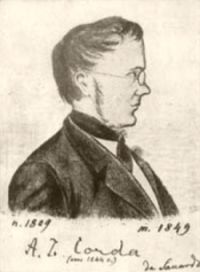
August Carl Joseph Corda

August Carl Joseph Corda

Summary

Portrait of August Carl Joseph Corda August Carl Joseph Corda Essay on the mineral waters of Carlsbad (1835)

These animalcules living never in thermal water, they are only to be seen at a few inches distance from the wells, and when kept in glasses or pots, they soon retreat towards the sides of the vessel. They are never found in the limpid water of a cold spring, river or well, nor of a hot spring, even if the water has reposed for hours and days, so that we can consider as erroneous, and suggested by a fondness for marvellous things, the popular opinion, so generally spread, that we swallow with common water innumerable animalcules.
Source: Wikisource

Portrait of August Carl Joseph Corda August Carl Joseph Corda Essay on the mineral waters of Carlsbad (1835)

Plenty of it is to be seen upon the boards, stones and pipes, which surround the hot wells, at their outlets, in short, in every place where the hot water runs or transudes. Carefully examined, that unctuous and gelatinous substance is composed of myriads of elegantly and symmetrically formed beings, most of them belonging to the animal kingdom; and their forms, their mode of life and of propagation can only excite the highest degree of astonishment.
Source: Wikisource

Portrait of August Carl Joseph Corda August Carl Joseph Corda Essay on the mineral waters of Carlsbad (1835)

Perseverance, so necessary in all sorts of researches, is indispensable in microscopic observations, which must be often repeated and varied; but that trouble is amply rewarded, and the pleasure felt by the investigator, who discovers new forms, so beautiful, so surprizing and unexpected, is beyond description.
FORM AND ORGANS.
According to the organisation of these animalcules, we can divide them into two classes, subdivided into six families, viz, the Naviculae, the Cosmaria, Euastra, Fragilariae, Closteria and Arthrodiae.
Source: Wikisource

Get perspective with Kwize: daily news enlightened by great literature