Summary

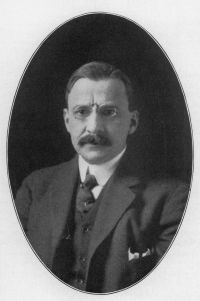
Portrait of August Hoch August Hoch Benign Stupors: A Study of a New Manic-Depressive Reaction Type

It is but a step from valueless life to death and the same tendency which makes the patient fancy he is dead, leads the tired man to sleep, the poet to sigh in verse for dissolution, and the myth maker to fabricate rebirth. The religions of the world are full of this yearning, which reaches its purest expression in the belief and philosophy of Nirvana. The ideational content of stupor has also its analogue in crime. The desire for perpetuation of relationships unprosperous in this world is not seen only in the delusion of mutual death.
Source: Gutenberg

Portrait of August Hoch August Hoch Benign Stupors: A Study of a New Manic-Depressive Reaction Type

When life fails to yield us what we want, we tend to become bored—a condition of apathy and inactivity, forming a nice parallel to stupor inasmuch as external reminders of reality and demands for activity are apt to call out irritability. A form of what is really mental disease, although not called insanity, is permanent boredom, a deterioration of interest, energy and even intelligence by which many troubled souls solve their problems.
Source: Gutenberg

Portrait of August Hoch August Hoch Benign Stupors: A Study of a New Manic-Depressive Reaction Type

Death may, therefore, well express a shrinking from adaptation and reality, and as such may symbolize one of the most deep-seated yearnings of the human soul. But from time immemorial man has associated with this yearning another one, one which, without the adaptation to reality being made, yet includes a certain attempt at objectivation, the desire for rebirth. We need not enter further into possible symbols for death per se, but it is quite necessary to speak briefly of the symbolic forms in which the striving for rebirth has ever found expression.
Source: Gutenberg

Get perspective with Kwize: daily news enlightened by great literature