Charlotte Lennox, The Female Quixote; or, The Adventures of Arabella…
“ The empire of love, said she, like the empire of honour, is governed by laws of its own, which have no dependence upon, or relation to, any other. ”
Elation, a fleeting state of profound joy or exultation, has been a recurring theme in literature, reflecting humanity’s desire to capture the ephemeral nature of euphoria. From Algernon Blackwood’s eerie depiction of elation as a delusion blurring human and animal forms to Philipp Otto Runge’s story of unquenchable ambition reflecting imperial excess, writers have portrayed it through psychological, spiritual, and symbolic perspectives.
Charlotte Lennox contrasts elation with love’s self-governing principles, while medieval works associate it with divine harmony. These diverse representations highlight elation’s duality—as both a transcendent gift and a fragile edge, echoing its connections to triumph, unease, and insanity.
Charlotte Lennox, The Female Quixote; or, The Adventures of Arabella…
“ The empire of love, said she, like the empire of honour, is governed by laws of its own, which have no dependence upon, or relation to, any other. ”
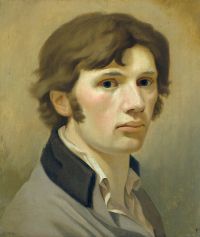 Philipp Otto Runge,
The Fairy Tales of the Brothers Grimm…
(1909)
“ King I am, but I must also be Emperor.’ ‘Alas, Wife,’ said the Man, ‘why dost thou now want to be Emperor?’ ‘Husband,’ she answered, ‘go to the Flounder. Emperor I will be.’ ‘Alas, Wife,’ said the Man, ‘Emperor he can’t make thee, and I won’t ask him. There is only one Emperor in the country; and Emperor the Flounder cannot make thee, that he can’t.’ ‘What?’ said the Woman. ‘I am King, and thou art but my husband. To him thou must go, and that right quickly. If he can make a King, he can also make an Emperor. ”
Anonymous, Gesta Romanorum Vol. I (1871)
“ My beloved, the emperor is our Lord Jesus Christ; the fair daughter is the human soul; the five soldiers are the five senses, and the dog is carnal affections, which disturb and slay the spirit. The triple chain is love to God—the fear of offending him, and shame when we have done so. ”
 Charles IV,
Select Historical Documents of the Middle Ages
(1892)
“ Thou hast often spread discord among the seven electors of the holy empire, through whom, as through seven candlesticks throwing light in the unity of a septiform spirit, the holy empire ought to be illumined. ”
 Johann Wolfgang von Goethe,
The Works of J. W. von Goethe
(1901–1902)
“ The Elector of the Palatinate might come and wait on both their Majesties; these might visit the electors; the last electoral sitting might be attended for the despatch of business in arrear, and the renewal of the electoral union,—nothing could call me forth from my passionate solitude. I let the bells ring for the rejoicings, the emperor repair to the Capuchin Church, the electors and emperor depart, without on that account moving one step from my chamber. ”
John Eliot, Select British Eloquence — Speech on the Petition of Right (1865)
“ These are the things, sir, I shall desire to have taken into consideration; that as we are the great council of the kingdom, and have the apprehension of these dangers, we may truly represent them unto the King; which I conceive we are bound to do by a driple obligation—of duty to God, of duty to his Majesty, and of duty to our country. ”
Various, Graham's Magazine, Vol. XXXV, No…
“ We can imagine when the council rose, that the angel who watched over the youth of our republic, and who had trembled for the result, clapped his hands for joy, and that the exultant sound, taken up by messenger after messenger, passed from hierarch to hierarch, until all heaven rang with the acclaim. ”
 Philip Schaff,
Nicene and Post-Nicene Fathers…
(1885)
“ Many years to our Emperor and Empress, the pious, the Christian. May Christ whom thou servest keep thee. These things are worthy of the faith. To the Priest, the Emperor. Thou hast straightened out the churches, victor of thine enemies, teacher of the faith. Many years to the pious Empress, the lover of Christ. Many years to her that is orthodox. May God save your kingdom. Ye have put down the heretics, ye have kept the faith. May hatred be far removed from your empire, and may your kingdom endure for ever! ”
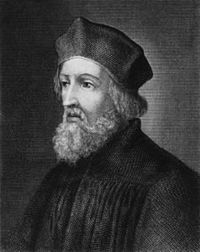 Jan Hus,
Letters of John Huss Written During His Exile and Imprisonment
(1845)
“ Our noblemen, by reminding the Emperor and the Council of their own words, can constrain them to do what they have promised. Then in the Council, with the assistance of God, will I loudly proclaim the truth; for, rather than to be thus basely stifled by them, I prefer to have my body burned with fire; but I am anxious that every Christian shall know what are my last words. I, therefore, in the name of the Most High, conjure my noble friends to act with energy, and to give me a last proof of their firmness. ”
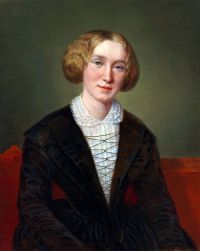 George Eliot,
Adam Bede
(1859)
“ The poor child no more conceived at present the idea that the young squire could ever be her lover, than a baker's pretty daughter in the crowd, whom a young emperor distinguishes by an imperial but admiring smile, conceives that she shall be made empress. ”
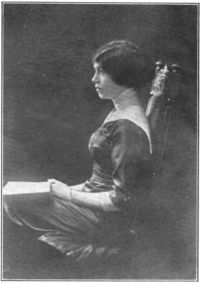 Ruth Cranston,
The Meccas of the World
(1913)
“ The extraordinary oath with which they accept each king, on his accession, is luminous: “We who are as good as you, and who are more powerful than you, elect you king, that you may protect our rights and liberties.” ”
Gustav A. Just, Life of Luther
“ When taking leave of the emperor, Elector John, rightly called the "Steadfast," spoke the memorable words, "I am sure that the doctrine contained in the Confession will stand even against the gates of hell." The emperor answered, "Uncle, Uncle, I did not expect to hear such words from your Grace. You will lose your electoral crown and your life, and your subjects will perish, together with their women and children." ”
Charles IV,
Select Historical Documents of the Middle Ages
(1892)
“ In a case, finally, where three prince electors in person, or the envoys of the absent ones, shall elect as king of the Romans a fourth from among themselves or from among their whole number—an elector prince, namely, who is either present or absent:— we decree that the vote of that person who has been elected, if he shall be present, or of his envoys if he shall chance to be absent, shall have full vigour and shall increase the number of those electing, and shall constitute a majority like that of the other prince electors. ”
Jan Hus,
Letters of John Huss Written During His Exile and Imprisonment
(1845)
“ I have learned only that your noblemen are here with the Emperor; wherefore, I conjure you to entreat his Majesty in my favour, and in the name of Almighty God, who has so generously bestowed his gifts upon him, and on account of the justice and truth which ought to be made manifest for the honour of God and the advancement of his Church; beseech his Majesty to deliver me from my chains, that I may be enabled to dispose of myself, and appear before a public assembly. Learn that I have been very ill, and have been obliged to take remedies, but that I am now better. ”
 James Anthony Froude,
The Divorce of Catherine of Aragon
(1891)
“ An alliance of the Emperor with an excommunicated sovereign in the face of a sentence which he had himself insisted on, and with a Bull of Deposition ready for launching, would be an insult to the Holy See more dangerous to it than the revolt of a single kingdom. ”
 J. Collingwood Bruce,
The Bayeux Tapestry Elucidated
“ The adoption of that wise maxim that a monarch can only rule by his ministers, renders the personal qualifications of the monarch of less importance than in former days. Still, even in our time, a remnant exists of the ancient form of election. In the coronation service{82} the king is directed, after entering the church and attending to his private devotions, to take his seat, not on the throne, but on the chair before and below the throne, and there repose himself. ”
Jonathan Elliot, Debates in the Several State Conventions on the Adoption of the Federal Constitution (1907)
“ I have lived, sir, a long time, and, the longer I live, the more convincing proofs I see of this truth—that God governs in the affairs of men. And if a sparrow cannot fall to the ground without his notice, is it probable that an empire can rise without his aid? ”
by John Adams, A Defense of the Constitutions of Government of the United States of America… (1787)
“ Here the electors take an oath, not to separate until they shall have unanimously elected a king, nor to render him when elected any obedience, until he has sworn to observe the pacta conventa and the laws.The candidates must let their gold glitter, and give splendid entertainments, which must be carried into debauch; the nobility are captivated with the attractions of magnificence and Hungarian wine, and infallibly declare in favor of the candidate who causes it to flow in the greatest profusion. ”
Ethel Gwendoline Vincent, Newfoundland to Cochin China
“ In connection with the ancestor-worship, which is the only form of worship performed by the upper classes, the Emperor's oath on his accession is interesting. "We, the successor to the prosperous throne of our Predecessors, do humbly and solemnly swear to the Imperial Founder of our House, and to our other Imperial Ancestors, that in pursuance of a great policy, co-extensive with the Heaven and with the Earth, we shall maintain, and secure from decline, the ancient form of government. ”
James Kerr, The Covenants And The Covenanters
“ Yea, we find this very thing in the utmost accomplishment of it, to have been the oath of the greatest angel that ever was, who setting his feet upon two of God's kingdoms, the one upon the sea, the other upon the earth, lifting up his hand to heaven, as you are to do this day, and so swearing. The effect of that oath you shall find to be this, "That the kingdoms of the world become the kingdoms of the Lord and His Christ, and He shall reign forever." ”
Anonymous, Gesta Romanorum Vol. II (1871)
“ My beloved, the emperor is God; the knight Christ, and the wife the soul. If the soul err, the law of God commands its death. Christ fights against the devil, and loses an arm, that is, all the austerity which incarnation confers. ”
 Orson F. Whitney,
Elias: An Epic of the Ages
“ The Holy Order [5] that for aye hath reigned, For loyal faith and lofty deeds ordained; The all-creating, all-controlling chain, Whereby the Gods perpetuate their reign, Whereby the higher, bending, lift the lower; Wielding the sceptre of Almighty Power, Ruling by right the nations, ill aware Whence came the thrones that have been, thrones that are; 2040 Which sets up one and puts another down, Their fate proclaimed as fortune's smile or frown; The power that reigns not save in righteousness, Persuades in meekness, chastens but to bless ”
Donald Campbell, A journey over land to India
“ In the election of Emperor, the laws of the Empire have laid down no qualification but that which ought to be the sine quâ non of all Princes, namely, that he be justus, bonus, et utilis——Neither have they made any limitation in regard to religion, nation, state, or age; nevertheless, the majority of electors being Papists, a Roman Catholic Prince is always chosen. ”
Charles IV,
Select Historical Documents of the Middle Ages
(1892)
“ And we empower them to treat wherever they please with the others, our co-princes and co-electors, ecclesiastical as well as secular, and to agree, decide and settle upon some person fit and suitable to be elected king of the Romans, and to be present, treat and deliberate in the transactions to be carried on concerning the election of such a person, for us and in our place and name ”
E. Katherine Bates, Seen and Unseen
“ Imperator is a great force in his way; a sort of plough that goes over the hard, caked-up earth and throws it open to the sunshine and rain and all Nature's beautiful influences, to all the possibility of Divine influences on the corresponding sphere. ”
Philip Schaff,
Nicene and Post-Nicene Fathers…
(1885)
“ But you are not only their emperor; you are ours too. For no small portion of your empire is the East, wherein the right faith has ever shone, and, besides, the other provinces and dioceses from which we have been convened. ”
D. H. Montgomery, The Leading Facts of English History
“ The new nobility were the creatures of the Crown, hence bound to support it; the clergy were timid, the Commons anything but bold, so that Parliament gradually became the servile echo and ready instrument of the throne. ”
 David Hume,
The History of England in Three Volumes…
“ The elector, trusting to so great an alliance, engaged in enterprises beyond his strength: and the king, not being able to support him in his distress, lost entirely, in the end of his life, what remained of the affections and esteem of his own subjects. ”
Anonymous, Gesta Romanorum Vol. I (1871)
“ My beloved, the emperor is God; the marble gate is the Church, which is placed above a running fountain that is, above the world, which fleets like a water-course. The judges indicate Mary, the mother of Jesus, and John the Evangelist. ”
| editor, Sacred Books of the East (1879)
“ There is a concluding chapter, where the duke gives expression to his loyal and personal feelings for the king, and the purpose to be served by the offerings, which he was then sending to the court. The burden of the Announcement is 'the virtue of reverence.' Let the king only feel how much depended on his attending reverently to his duties, and all would be well. The people would love and support the dynasty of Kâu, and Heaven would smile upon and sustain it. ”
 Jonathan Swift,
The Works of the Rev. Jonathan Swift
(1801)
“ The truth of this appears, by that unnatural rebellion which the Yortes raised, without the least provocation, in the first year of the late emperor's reign; which may be sufficient to convince your majesty, that every soul of that denomination, was, is, and will be for ever, a favourer of the pretender, a mortal enemy to your illustrious family, and an introducer of new gods into the empire. ”
“ On that day Mine Elect One shall sit on the throne of gloryAnd shall try their works,And their places of rest shall be innumerable. And their souls shall grow strong within them when they see Mine elect ones,And those who have called upon My glorious name:4. Then will I cause Mine Elect One to dwell among them. ”
Jonathan Swift,
The Works of the Rev. Jonathan Swift
(1801)
“ But as great princes, when they have subdued all about them, presently have universal monarchy in their thoughts; so your grace, having conquered all the corruptions in a diocese, and then pursued your victories over a province, would fain go farther and save a whole kingdom, and would never be quiet, if you could have your will, until you had converted the world. ”
Pius a Sp. Sancto, Life of Father Ignatius of St. Paul…
“ Are there no other emperors, or kings, or queens for Him to choose among, if emperors He has need of for the work? My friends, fear not. I do not intend to be disappointed, and, what is more, I shall not be, nor will any of those be who work for the saving of souls, even on the very largest scale, unless we are so foolish as to turn back and grow slack. ”
J. T. McCleary, Studies in Civics
“ An elective monarchy is one in which the succession is by election; the term for life; example, the old German empire, in which the emperor was chosen by certain princes called "electors." [Footnote: Our mode of electing a president may have been suggested in part by this old practice.] An absolute monarchy is one in which the three functions of government as related to law—the legislative, executive and judicial—are all vested in one person ”
 Bertrand Russell,
The Problem of China
“ What distinguishes the Emperor is not so much his political power, which fluctuates with the strength of his personality, as certain religious prerogatives. The Emperor is the Son of Heaven; he sacrifices to Heaven at the winter solstice. ”
Philip Schaff,
Nicene and Post-Nicene Fathers…
(1885)
“ Rightly follows the word to the kingdom of the elect: “If God be for us, who can be against us? He that spared not His own Son, but delivered Him up for us all, how has He not also with Him given us all things? Who shall lay anything to the charge of God’s elect? ”
Charles IV,
Select Historical Documents of the Middle Ages
(1892)
“ Within the imperial place of session tables shall be prepared for the seven prince electors, ecclesiastical and secular,—three, namely, on the right, and three others on the left, and the seventh directly opposite the face of the emperor or king, as has above been more clearly defined by us in the chapter concerning the seating and precedence of the prince electors; in such wise, also, that no one else, of whatever dignity or standing he may be, shall sit among them or at their table. ”
 Albert Beebe White,
Source Problems in English History
(1915)
“ But if it shall happen, that such king or queen, upon his or her succession to the Crown of this realm, shall be under the age of twelve years, then every such king or queen shall make, subscribe, and audibly repeat the said declaration at his or her coronation, or the first day of meeting of the first parliament as aforesaid, which shall first happen after such king or queen shall have attained the said age of twelve years. ”
Jean Paul Hippolyte Emmanuel Adhémar Esmein, 1911 Encyclopædia Britannica (1911)
“ This emperor, who assumed so high a tone with his subjects, his bishops and his counts, who undertook to uphold public order in civil life, held himself no less responsible for the eternal salvation of men’s souls in the other world. ”
Albert Barnes, Notes on the New Testament, Explanatory and Practical…
“ Thus, in case of a revolution in a government, when a reigning prince should be driven from his kingdom, to be succeeded by a new dynasty, which would long occupy the throne, and involving, as the consequence of the revolution, important events extending far into the future, we would naturally say that these things were shortly to occur, or that the time was near. ”
T. F. Tout, The Empire and the Papacy, 918-1273
“ If an emperor, a king, a duke, a count, or any other lay person presume to give investiture of any ecclesiastical dignity, let him be excommunicated.’ This decree gave the signal for the great Investiture Contest, and for the greater struggle of Papacy and Empire that convulsed Europe, save during occasional breaks, for the next two centuries. ”
