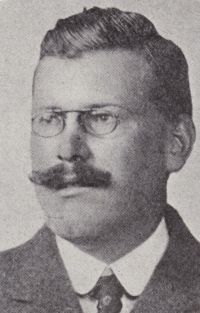
B. Fletcher Robinson

B. Fletcher Robinson

Summary

Portrait of B. Fletcher Robinson B. Fletcher Robinson The Chronicles of Addington Peace… (1905)

Abel Kingsley, vaguely described in the visitors' book of the Princetown Arms as of Memphis University, U.S.A., was sitting on the cairn hill above the great prison that held Julius Craig.
To the far horizon there stretched the melancholy moors, deserted wastes of rushy marshes and stunted heather, broken here and there by outcrops of granite, that crowned the rolling ground like the ruins of a hundred feudal castles. For Dartmoor is a huge granite tableland, and on its barren surface no corn will grow nor tree flourish.
Source: Wikisource

Portrait of B. Fletcher Robinson B. Fletcher Robinson The Chronicles of Addington Peace… (1905)

A nervous man would never have stood that strain; but we were not a neurotic couple, the old chap and I.
As hard and keen and clever as a lad of twenty-one was Thomas Hearne. It was he who spent the day in Plymouth, returning with a wig and long overcoat that might temporarily conceal the convict's identity until he could change his yellow prison uniform for the clothes I had already bought; it was he who gathered to himself all the weather lore of the village until he had become a better prophet than the wisest veteran of the moors.
Source: Wikisource

Portrait of B. Fletcher Robinson B. Fletcher Robinson The Chronicles of Addington Peace… (1905)

We drove on in silence for a while, and then the old man rose, kneeling upon the cushions of the back seat.
“Here comes the sun, Julius Craig,” he said. “The mists are scattering, and the world comes peeping through to welcome you back to freedom. Women and wine and cards—does the old spirit stir within you?”
“And who the devil may you be?” asked the convict, turning upon him.
Source: Wikisource

Get perspective with Kwize: daily news enlightened by great literature