Summary

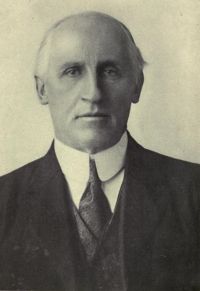
Portrait of Bolton Hall Bolton Hall The psychology of sleep

We may not always be able to sleep, but we can always lie in the arms of our Great Mother Nature. There is a real philosophy as well as devotion in the old prayer we teach our children, “Now I lay me down to sleep.” A still older form of the almost instinctive recognition of the fact that sleeping is but intrusting ourselves to the Universal love was, “He committed himself to God in sleep.” Like sleep, a wakeful night may be a growing time. It affords the quiet, the time, the seclusion to think over the meanings of things, or even to seek the cause of the wakefulness itself.
Source: Gutenberg

Portrait of Bolton Hall Bolton Hall The psychology of sleep

It is harmony, peace, rest. We have but to look at the workings of our own marvelous physical bodies to perceive that law. The more we study the human body, the more we wonder at its mechanism. Yet every part of this intricate machinery, in harmony with each other part, finds its own work, unless man, through his misunderstanding, throws it out of order.
Perhaps the strongest proof of the naturally harmonious working of the body is found in the responsive distress or disease which result from the wrong use of any one function. It is not necessary to cut the heart itself to injure it.
Source: Gutenberg

Portrait of Bolton Hall Bolton Hall The psychology of sleep

In his lectures on Botany at the Royal School of Medicine in Great Britain, Professor Leo H. Grindon said: “Man is captured in sleep not by death but by his better nature; to-day runs in through a deeper day to become the parent of to-morrow, and to issue every morning, bright as the morning of life, and of life-size, from the peaceful womb of the cerebellum.” This is the result not of a passive state, but of an active instinct; it accepts sleep as a time of growth, not merely a time of rest.
Source: Gutenberg

Get perspective with Kwize: daily news enlightened by great literature