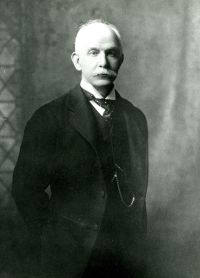
Brooks Adams

Brooks Adams

Summary

Portrait of Brooks Adams Brooks Adams The Law of Civilization and Decay… (1896 | notes)

The Byzantine system was adopted. A double wall, the inner commanding the outer, with a moat between; and three enormous towers rising from the moat, formed the donjon. There were stone machicoulis and all the refinements of defence which appeared in France under Saint Louis and his son, and a study of this stupendous monument shows plainly whence Europeans drew their military instruction for a century to come.
The Krak was the outwork dominating the plain where the Christians never made their footing good, and stood at the apex of a triangle of fortresses as remarkable as itself.
Source: Wikisource

Portrait of Brooks Adams Brooks Adams The Law of Civilization and Decay… (1896 | notes)

In the eleventh century this language was no metaphor, for the Cluniac monk spoke as the mouthpiece of a god who was there actually among them, offering the cross he brought from the grave, and promising them triumphs: not the common triumphs which may be won by man's unaided strength, but the transcendent glory which belongs to beings of another world.
So the crusaders rode out to fight, the originals of the fairy knights, clad in impenetrable armour, mounted on miraculous horses, armed with resistless swords, and bearing charmed lives.
Source: Wikisource

Portrait of Brooks Adams Brooks Adams The Law of Civilization and Decay… (1896 | notes)

Within fifty years after the conquest the feudal machinery was in ruin, and the strategic points, one after another, passed into the hands of the strongest force of the age, the force which was incarnate imagination.
The fortresses built by the monks were the ramparts of Christendom, and among the remains which have survived the past, perhaps none are more impressive than the huge castles of the crusaders in the gorges of the Syrian mountains
Source: Wikisource

Get perspective with Kwize: daily news enlightened by great literature