Brooks Adams

Brooks Adams

Summary

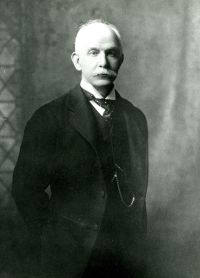
Portrait of Brooks Adams Brooks Adams The Law of Civilization and Decay… (1896 | notes)

The soldiers of all nations were strenuously for peace, the priests as strenuously for war. They felt confident of repeating the sack of Constantinople at Cairo, nor can there be a greater contrast than Martin spurning the wealth of Constantinople as dross, and Pelagius rejecting the Sepulchre that he might glut himself with Egyptian wealth.
But all history shows that the emotionalist cannot compete with the materialist upon his own ground. In the end, under free economic competition, he must be eliminated. Pelagius tarried idly in the jaws of death until the Nile rose and engulfed him.
Source: Wikisource

Portrait of Brooks Adams Brooks Adams The Law of Civilization and Decay… (1896 | notes)

Florence coined the florin in 1252, Venice the ducat in 1284, and, between the two dates, Saint Louis issued his crowns.
The return of the precious metals to the West indicated a revival of trade and a change in the form of competition. Instead of the imagination, the economic faculty began to predominate, and energy chose money as its vent. Within a generation the miracle fell decisively in power, and the beginning of this most crucial of social revolutions is visible in the third crusade, the famous expedition led by Philip Augustus and Cœur de Lion.
Source: Wikisource

Portrait of Brooks Adams Brooks Adams The Law of Civilization and Decay… (1896 | notes)

For the north and west of Europe the crusade of Constantinople seems to have been the turning point whence the imagination rapidly declined. At the opening of the thirteenth century, everything shows that the genuine ecstatic type predominated in the Church—the quality of mind which believed in the miracle, and therefore valued the amulet more than money. Innocent himself, with all his apparent worldliness, must have been such a man
Source: Wikisource

Get perspective with Kwize: daily news enlightened by great literature