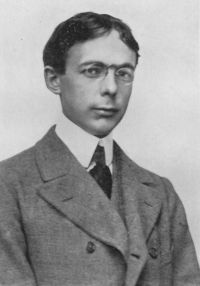
Carl Russell Fish

Carl Russell Fish

Summary

Portrait of Carl Russell Fish Carl Russell Fish The Civil Service and the Patronage… (1905)

In the end, the power went to the strong man.
To take our history as a whole, Washington probably controlled appointments more fully than any other president; under Monroe the members of the cabinet possessed their greatest power, and under Pierce the congressional delegations were most dictatorial. It was not until after the close of the period covered by this chapter that senatorial courtesy acquired its preëminence.
That this system tended to bring many politicians into office is obvious. Military service ceased to be so often rewarded with civil position as formerly.
Source: Wikisource

Portrait of Carl Russell Fish Carl Russell Fish The Civil Service and the Patronage… (1905)

Among those who had rendered political service, the newspaper men seem to have received fewer rewards than previously. In 1845 the franking privilege was restricted, and minor post-offices were thereby rendered less profitable to local editors; while the men who controlled great national organs could not afford to take office. In fact, after 1861, Horace Greeley was rather a dictator of appointments than a seeker after them; and though Lincoln once offered James Gordon Bennett a foreign mission to keep him in good humor, he knew beforehand that the offer would not be accepted.
Source: Wikisource

Portrait of Carl Russell Fish Carl Russell Fish The Civil Service and the Patronage… (1905)

Particularly in this very period the life history of the average citizen showed a great variety of occupations pursued with fair success, and an amazing capacity for acquiring a simple rule of thumb and applying it with ingenuity. The study of Van Buren's administration showed us that high ability was not lacking when required: a man who could organize a party for victory could administer a large body of officials with vigor.
Source: Wikisource

Get perspective with Kwize: daily news enlightened by great literature