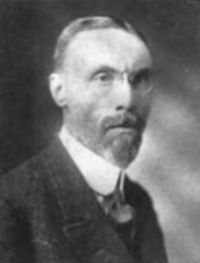
Charles Burton Gulick

Charles Burton Gulick

Summary

Portrait of Charles Burton Gulick Charles Burton Gulick The Harvard Classics Vol. 51 (1914)

Thus Agamemnon, whose power on the Greek mainland had by no means been limited to the one small citadel of Mycenæ, snugly built among the hills of Argos, had room to expand to something like imperial dimensions through the patriotic impulse of these later epic singers. Growing more skillful in characterization, they helped to rear the great antithesis between Achæan and Trojan, between Greek and barbarian, the West and the East; they founded Hellenism.
Source: Wikisource

Portrait of Charles Burton Gulick Charles Burton Gulick The Harvard Classics Vol. 51 (1914)

In the Greek consciousness it had its spring in the worship of Dionysus, who in one of his aspects was a god of the underworld, latest comer into the Greek Pantheon, whose religion had evoked much opposition, and whose story was full of suffering as well as triumph and joy. He represented the life-giving forces of nature; he was god of the vine and of wine, and at the vintage festival the country folk celebrated him in dance and song.
Source: Wikisource

Get perspective with Kwize: daily news enlightened by great literature