Summary

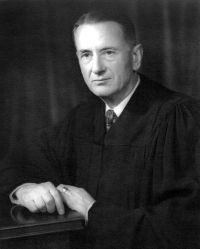
Portrait of Charles Evans Whittaker Charles Evans Whittaker United States v. Virginia Electric and Power Company…

This Court held in the Twin City case, supra, that the owner of adjoining fast lands has no interest in the waters of a navigable river, and that those waters do not, as against the Government, attribute to the value of such lands. It said:
'If the owner of the fast lands can demand water-power value as part of his compensation, he gets the value of a right that the Government in the exercise of its dominant servitude can grant or withhold as it chooses. The right has value or is an empty one dependent solely on the Government.
Source: Wikisource

Portrait of Charles Evans Whittaker Charles Evans Whittaker United States v. Virginia Electric and Power Company…

Hence, the easement had no possible value-not even a nuisance value-to the power company at the time the Government took it.
It is settled that the 'just compensation' required by the Fifth Amendment to be paid for the taking of private property for public use is the value at the very time of the taking to the person from whom taken. 'The value should be fixed as of the date of the proceedings and with reference to the loss the owner sustains, considering the property in its condition and situation at the time it is taken, and not as enhanced by the purpose for which it was taken.
Source: Wikisource

Get perspective with Kwize: daily news enlightened by great literature