Summary

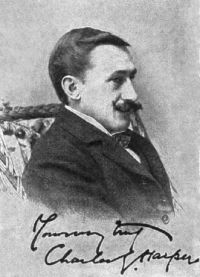
Portrait of Charles G. Harper Charles G. Harper The Dover Road: Annals of an Ancient Turnpike

Low and broken cliffs picturesquely shelved down to the water’s edge where a neat embankment now runs, and the balustrades of the old bridge serve their old purpose on this new river-wall. The embankment is an improvement from an utilitarian point of view, but its long straight line hurts the artistic sense.
The stranger should come into Rochester preferably on the evening of a summer’s day, and, as first impressions must ever remain the most distinct, he should walk in over the bridge. At such times a golden haze spreads over the city and the river, and renders both a dream of beauty.
Source: Gutenberg

Portrait of Charles G. Harper Charles G. Harper The Dover Road: Annals of an Ancient Turnpike

When the moon rises in solemn majesty on summer nights and [Pg 257] makes a lane of silvery glory across the Channel; when the winking light from Cape Grisnez shows where the French coast lies, and the glow from the lighthouse on the Admiralty Pier marks the harbour at his feet; when Dover lamps burn yellow beside the moonrays, and the high-road to London lies stark and white in the valley of the Dour, then may the sentry on his eyrie hear, between the ghostly tapping of the halyards on the flagstaff, the tramp of the ages. Forty centuries looked down upon the French in Egypt
Source: Gutenberg

Portrait of Charles G. Harper Charles G. Harper The Dover Road: Annals of an Ancient Turnpike

They rise from their camp of nineteen hundred years ago; they march along the Watling Street that was made by their descendants; and the sheen of their armour, the glitter of the pale moonlight on their eagle standards, and the tramp of many feet are as real to the imaginative traveller, if not of a greater reality, than the moaning telegraph that runs on countless poles in a diminishing procession beside the road as far as eye can reach.
Source: Gutenberg

Get perspective with Kwize: daily news enlightened by great literature