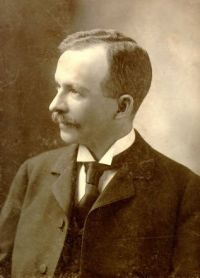
Charles W. Chesnutt

Charles W. Chesnutt

Summary

Portrait of Charles W. Chesnutt Charles W. Chesnutt Frederick Douglass

He had met Douglas Jerrold, the famous wit, and had been entertained by the poet William Howitt, who made a farewell speech in his honor. Everywhere he had denounced slavery, everywhere hospitable doors had opened wide to receive him, everywhere he had made friends for himself and his cause. A slave and an outcast at home, he had been made to feel himself a gentleman, had been the companion of great men and good women. Urged to remain in this land of freedom, and offered aid to establish himself in life there, his heart bled for his less fortunate brethren in captivity
Source: Gutenberg

Portrait of Charles W. Chesnutt Charles W. Chesnutt Frederick Douglass

There were thousands of conservative Northern men, who, recognizing the constitutional guarantees of slavery and the difficulty of abolishing it unless the South should take the initiative, were content that it should be preserved intact so long as it remained a local institution. But when the attempt was made to make the North wash the South's dirty linen, and transform every man in the Northern States into a slave-catcher, it wrought a revulsion of feeling that aroused widespread sympathy for the slave and strengthened the cause of freedom amazingly.
Source: Gutenberg

Portrait of Charles W. Chesnutt Charles W. Chesnutt Frederick Douglass

On Colonel Lloyd's plantation Douglass spent four years of the slave life of which his graphic description on the platform stirred humane hearts to righteous judgment of an unrighteous institution. It is enough to say that this lad, with keen eyes and susceptible feelings, was an eye-witness of all the evils to which slavery gave birth. Its extremes of luxury and misery could be found within the limits of one estate. He saw the field hand driven forth at dawn to labor until dark.
Source: Gutenberg

Get perspective with Kwize: daily news enlightened by great literature