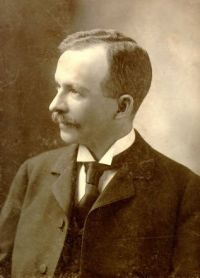
Charles W. Chesnutt

Charles W. Chesnutt

Summary

Portrait of Charles W. Chesnutt Charles W. Chesnutt The Marrow of Tradition — XXI. (1901)

A dead nigger is no loss to any white man. I say, burn the nigger."
"I do not believe," said Carteret, who had gone to the window and was looking out,--"I do not believe that we need trouble ourselves personally about his punishment. I should judge, from the commotion in the street, that the public will take the matter into its own hands. I, for one, would prefer that any violence, however justifiable, should take place without my active intervention."
Source: Wikisource

Portrait of Charles W. Chesnutt Charles W. Chesnutt The Marrow of Tradition — XXI. (1901)

If an outraged people, justly infuriated, and impatient of the slow processes of the courts, should assert their inherent sovereignty, which the law after all was merely intended to embody, and should choose, in obedience to the higher law, to set aside, temporarily, the ordinary judicial procedure, it would serve as a warning and an example to the vicious elements of the community, of the swift and terrible punishment which would fall, like the judgment of God, upon any one who laid sacrilegious hands upon white womanhood.
Source: Wikisource

Portrait of Charles W. Chesnutt Charles W. Chesnutt The Marrow of Tradition — XXI. (1901)

Carteret went on. "It is symptomatic; it is the logical and inevitable result of the conditions which have prevailed in this town for the past year. It is the last straw."
"Burn the nigger," reiterated McBane. "We seem to have the right nigger, but whether we have or not, burn _a_ nigger. It is an assault upon the white race, in the person of old Mrs. Ochiltree, committed by the black race, in the person of some nigger. It would justify the white people in burning _any_ nigger. The example would be all the more powerful if we got the wrong one.
Source: Wikisource

Get perspective with Kwize: daily news enlightened by great literature