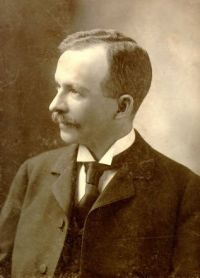
Charles W. Chesnutt

Charles W. Chesnutt

Summary

Portrait of Charles W. Chesnutt Charles W. Chesnutt The Marrow of Tradition — XXVIII. (1901)

For, as the months had passed, Carteret's thoughts, centring more and more upon the negro, had led him farther and farther, until now he was firmly convinced that there was no permanent place for the negro in the United States, if indeed anywhere in the world, except under the ground. More pathetic even than Jerry's efforts to escape from the universal doom of his race was his ignorance that even if he could, by some strange alchemy, bleach his skin and straighten his hair, there would still remain, underneath it all, only the unbleached darky,--the ass in the lion's skin.
Source: Wikisource

Portrait of Charles W. Chesnutt Charles W. Chesnutt The Marrow of Tradition — XXVIII. (1901)

The major eyed Jerry with an air of supreme disgust. What could be expected of a race so utterly devoid of tact? It seemed as though this negro thought a white gentleman might want to bribe him to remain away from the polls; and the negro's willingness to accept the imaginary bribe demonstrated the venal nature of the colored race,--its entire lack of moral principle!
Source: Wikisource

Portrait of Charles W. Chesnutt Charles W. Chesnutt The Marrow of Tradition — XXVIII. (1901)

Many white Republicans, deluded with the hope that by the elimination of the negro vote their party might receive accessions from the Democratic ranks, went over to the white party. By fraud in one place, by terrorism in another, and everywhere by the resistless moral force of the united whites, the negroes were reduced to the apathy of despair, their few white allies demoralized, and the amendment adopted by a large majority. The negroes were taught that this is a white man's country, and that the sooner they made up their minds to this fact, the better for all concerned.
Source: Wikisource

Get perspective with Kwize: daily news enlightened by great literature