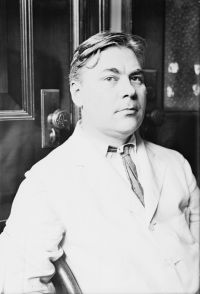
Don Marquis

Don Marquis

The Mulatto (1919)

Summary

Portrait of Don Marquis Don Marquis The Mulatto (1919)

Carter began to learn that he was a nigger very early in life. Nigger children are not left long in doubt anywhere, and especially in the South. Carter first saw the light—and the shadows—of day in Atlanta. The color line itself, about which one hears so much talk, seemed to run along one end of the alley in which he was born. It was an alley with a gutter and a great deal of mud in it. At the corner, where it gave into a little narrow street not much better than an alley itself, the mud was the thickest, deepest, and best adapted to sculptural purposes.
Source: Wikisource

Portrait of Don Marquis Don Marquis The Mulatto (1919)

The dreams and the despairs of all his miserable and hampered life passed before him in a whirl, and now the cry was answered.
"Yes," he said, lifting his head, and rising at that instant into a larger thing than he had ever been, "I will stand by you. I will die with you."
Source: Wikisource

Portrait of Don Marquis Don Marquis The Mulatto (1919)

The next moment his arms were pinioned, and he was lifted and flung away from the negro he had been fighting to protect by half a dozen men.
"You fools! You fools!" he raged, struggling toward the center of the crowd again, "you're killing a white man there. An innocent white man—Do you stop at nothing? You're killing a white man, I say!"
"White man?" said the person whom he had struck, and who appeared to bear him little resentment for the blow. "Who's a white man? Not Jerry Carter here! He wasn't any white man.
Source: Wikisource

Get perspective with Kwize: daily news enlightened by great literature