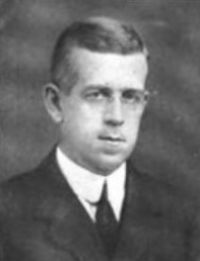
Chester Noyes Greenough

Chester Noyes Greenough

Summary

Portrait of Chester Noyes Greenough Chester Noyes Greenough The Harvard Classics Vol. 51 (1914)

Not less notable than his universality of thought, his compactness of style, and his swiftness and range of illustration, is Emerson's delightful benignity of tone. It would be hard to find any one whose opposition is so high minded, whose refusal is so gentle, whose good will—though perhaps never anxious—is so uniformly evident. The sweetness of Emerson's face, as we know it from his most famous portrait, is to be felt throughout his work.
Source: Wikisource

Portrait of Chester Noyes Greenough Chester Noyes Greenough The Harvard Classics Vol. 51 (1914)

When we sincerely find, therefore, that we cannot agree with the Past, then, says Emerson, we must break with it, no matter how great the prestige of its messengers. But often the Past does not disappoint us; often it assists us in our quest to become our highest selves. For in the Past there have been many men of genius; and, inasmuch as the man of genius has come nearer to being continually conscious of his relation to the Over-Soul, it follows that the genius is actually more ourselves than we are.
Source: Wikisource

Portrait of Chester Noyes Greenough Chester Noyes Greenough The Harvard Classics Vol. 51 (1914)

If Franklin's life seems earthy in comparison, it should be remembered that, whatever his motives, he did manage to confer upon his country such benefits in science, in literature, diplomacy, practical arts, and public welfare as should entitle him to a respect which we may well deny to many of his rules for practicing the art of life. We could spare the practical advantages of having had among us a man like Franklin only if it were necessary to do so in order that the inner light which guided John Woolman might not be extinguished.
Source: Wikisource

Get perspective with Kwize: daily news enlightened by great literature