Summary

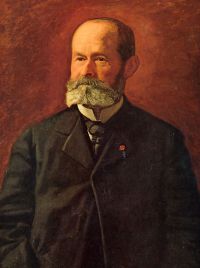
Portrait of Daniel G. Brinton Daniel G. Brinton The Lenâpé and Their Legends

The spies which the Lenape had sent forward for the purpose of reconnoitring, had long before their arrival discovered that the country east of the Mississippi was inhabited by a very powerful nation, who had many large towns built on the great rivers flowing through their land. Those people (as I was told) called themselves Talligeu or Talligewi. Colonel John Gibson, however, a gentleman who has a thorough knowledge of the Indians, and speaks several of their languages, is of opinion that they were not called Talligewi, but Alligewi.
Source: Gutenberg

Portrait of Daniel G. Brinton Daniel G. Brinton The Lenâpé and Their Legends

Brainerd explains this very correctly when he says: "They do not suppose a divine power essential to or inhering in these creatures, but that some invisible beings, not distinguished from each other by certain names, but only notionally, communicate to these animals a great power, and so make these creatures the immediate authors of good to certain persons. Hence such a creature becomes sacred to the person to whom he is supposed to be the immediate author of good, and through him they must worship the invisible powers, though to others he is no more than another creature."
Source: Gutenberg

Portrait of Daniel G. Brinton Daniel G. Brinton The Lenâpé and Their Legends

Their kinsmen, the Mohegans, varied this cosmogonical tradition, though retaining some of its main features. They taught that in the beginning there was nought but water and sky. At length from the sky a woman descended, our common mother. As she approached the boundless ocean, a small point of land rose above the watery surface, and supplied her with firm footing.
Source: Gutenberg

Get perspective with Kwize: daily news enlightened by great literature