Summary

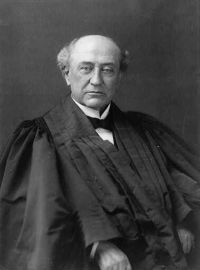
Portrait of David Josiah Brewer David Josiah Brewer Phineas Pam-to-Pee v. United States…

But even if the language of the prior opinions of the court of claims and this court can be tortured into a different construction, still there can be no question of the jurisdiction of the court of claims over the present action. The jurisdiction of a court is not exhausted by the mere entry of a judgment. It always has power to inquire whether that judgment has been executed, and the contention here is-and it is the basis of this suit-that the judgment which was rendered in the prior suit has not been executed.
Source: Wikisource

Portrait of David Josiah Brewer David Josiah Brewer Phineas Pam-to-Pee v. United States…

From this conclusion I am constrained to dissent, because, in my opinion, there is no power in the court to entertain jurisdiction, and therefore no right in it to decide the question of laches. In other words, I think the plaintiffs on error must be relegated to Congress for relief, not because they have lost their right to redress in the courts by their neglect, but because the wrong which they have suffered is one which can only be remedied by Congress, the courts being without jurisdiction over the subject-matter.
Source: Wikisource

Portrait of David Josiah Brewer David Josiah Brewer Phineas Pam-to-Pee v. United States…

That is to say, all the Indians discovered were allowed to participate equally in the fund, irrespective of the generation to which they belonged. The son of an Indian who appeared on one of the pay rolls was allowed only the same amount which each of, say, five grandchildren of an Indian on one of the pay rolls was allowed. They should have taken by representation. The aggregate of the five shares of the five grandchildren mentioned should have equaled the share of the son of the original payee. The consequence is that the whole judgment was distributed on a wrong basis.
Source: Wikisource

Get perspective with Kwize: daily news enlightened by great literature