Summary

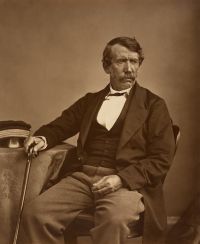
Portrait of David Livingstone David Livingstone A Popular Account of Dr Livingstone's Expedition to the Zambesi and its Tributaries… (1894)

The hippopotamus, having selected some still reach of the river to spend the day, rises out of the bottom, where he has been enjoying his morning bath after the labours of the night on shore, blows a puff of spray from his nostrils, shakes the water out of his ears, puts his enormous snout up straight and yawns, sounding a loud alarm to the rest of the herd, with notes as of a monster bassoon.
Source: Wikisource

Portrait of David Livingstone David Livingstone A Popular Account of Dr Livingstone's Expedition to the Zambesi and its Tributaries… (1894)

It is an entire mistake to suppose that the slave trade is one of buying and selling alone; or that engagements can be made with labourers in Africa as they are in India; Mariano, like other Portuguese, had no labour to spare. He had been in the habit of sending out armed parties on slave- hunting forays among the helpless tribes to the north-east, and carrying down the kidnapped victims in chains to Quillimane, where they were sold by his brother-in-law Cruz Coimbra, and shipped as "Free emigrants" to the French island of Bourbon.
Source: Wikisource

Portrait of David Livingstone David Livingstone A Popular Account of Dr Livingstone's Expedition to the Zambesi and its Tributaries… (1894)

The five headmen came on board and listened in quiet sadness to the story of poor Sekwebu, who died at the Mauritius on his way to England. "Men die in any country," they observed, and then told us that thirty of their own number had died of smallpox, having been bewitched by the people of Tette, who envied them because, during the first year, none of their party had died. Six of their young men, becoming tired of cutting firewood for a meagre pittance, proposed to go and dance for gain before some of the neighbouring chiefs.
Source: Wikisource

Get perspective with Kwize: daily news enlightened by great literature