Summary

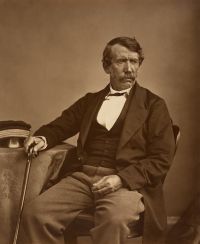
Portrait of David Livingstone David Livingstone A Popular Account of Dr Livingstone's Expedition to the Zambesi and its Tributaries… (1894)

It seems to narrow itself into whether a Christian man may lawfully use the civil power or the sword at all in defensive war, as police or otherwise. We would do almost anything to avoid a collision with degraded natives; but in case of an invasion--our blood boils at the very thought of our wives, daughters, or sisters being touched--we, as men with human feelings, would unhesitatingly fight to the death, with all the fury in our power.
The good Bishop was as intensely averse to using arms, before he met the slave-hunters, as any man in England.
Source: Wikisource

Portrait of David Livingstone David Livingstone A Popular Account of Dr Livingstone's Expedition to the Zambesi and its Tributaries… (1894)

A few miles west of the Makoa of Matingula, we came again among the Makonde, but now of good repute. War and slavery have driven them to seek refuge on the sand-banks. A venerable-looking old man hailed us as we passed, and asked us if we were going by without speaking. We landed, and he laid down his gun and came to us; he was accompanied by his brother, who shook hands with every one in the boat, as he had seen people do at Kilwa. "Then you have seen white men before?" we said. "Yes," replied the polite African, "but never people of your quality."
Source: Wikisource

Portrait of David Livingstone David Livingstone A Popular Account of Dr Livingstone's Expedition to the Zambesi and its Tributaries… (1894)

On a small island where the slaveholders have complete power over the slaves, and where there is no free soil such as is everywhere met with in Africa, the experiment ought not to be repeated. Were Mr. Sunley commencing again, it should neither be in Zanzibar nor Johanna, but on African soil, where, if even a slave is ill-treated, he can easily by flight become free. On an island under native rule a joint manufacture by Arabs and Englishmen might only mean that the latter were to escape the odium of flogging the slaves.
Source: Wikisource

Get perspective with Kwize: daily news enlightened by great literature