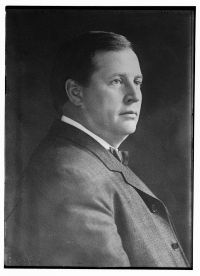
E. E. Smith

E. E. Smith

Summary

Portrait of E. E. Smith E. E. Smith Robot nemesis (1939)

The greatest man of our age, the man to whom humanity owes most, is entirely unknown to fame. Indeed, not one in a hundred million of humanity's teeming billions has so much as heard his name. Now that he is dead, however, I am released from my promise of silence and can tell the whole, true, unvarnished story of Ferdinand Stone, physicist extraordinary and robot-hater plenipotentiary.
Source: Gutenberg

Portrait of E. E. Smith E. E. Smith Robot nemesis (1939)

From every projector that could be brought to bear there flamed out against the Dresden beams of an energy and of a potency indescribable, at whose scintillant areas of contact the defensive screens of the robot-manned cruiser flared into terribly resplendent brilliance. Every type of lethal vibratory force was hurled, upon every usable destructive frequency.
Needle-rays and stabbingly penetrant stilettos of fire thrust and thrust again. Sizzling, flashing planes cut and slashed. The heaviest annihilating and disintegrating beams generable by man clawed and tore in wild abandon.
Source: Gutenberg

Portrait of E. E. Smith E. E. Smith Robot nemesis (1939)

Martin stared into his plate in amazement. The Communications Officer of Martin's ship, the Washington, had slumped down loosely into his seat as though his every bone had turned to a rubber string. His tongue lolled out limply between slack jaws, his eyes protruded, his limbs jerked and twitched aimlessly.
Every man visible in the plate was similarly affected—the entire Communications staff was in the same pitiable condition of utter helplessness. But Ferdinand Stone did not stare.
Source: Gutenberg

Get perspective with Kwize: daily news enlightened by great literature