Summary

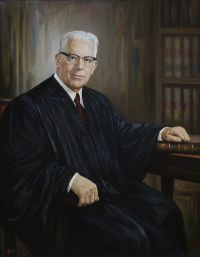
Portrait of Earl Warren Earl Warren Coppedge v. United States — Opinion of the Court

Since our statutes and rules make an appeal in a criminal case a matter of right, the burden of showing that that right has been abused through the prosecution of frivolous litigation should, at all times, be on the party making the suggestion of frivolity. It is not the burden of the petitioner to show that his appeal has merit, in the sense that he is bound, or even likely, to prevail ultimately. He is to be heard, as is any appellant in a criminal case, if he makes a rational argument on the law or facts.
Source: Wikisource

Portrait of Earl Warren Earl Warren Coppedge v. United States — Opinion of the Court

If it were the practice of a Court of Appeals to screen the paid appeals on its docket for frivolity, without hearing oral argument, reviewing a record of the trial proceedings or considering full briefs, paupers could, of course, be bound by the same rules. But, if the practice of the Court of Appeals is to defer rulings on motions to dismiss paid appeals until the court has had the benefit of hearing argument and considering briefs and an adequate record, we hold it must no less accord the poor person the same procedural rights.
Source: Wikisource

Portrait of Earl Warren Earl Warren Coppedge v. United States — Opinion of the Court

It is the burden of the Government, in opposing an attempted criminal appeal in forma pauperis, to show that the appeal is lacking in merit, indeed, that it is so lacking in merit that the court would dismiss the case on motion of the Government, had the case been docketed and a record been filed by an appellant able to afford the expense of complying with those requirements.
Source: Wikisource

Get perspective with Kwize: daily news enlightened by great literature