Summary

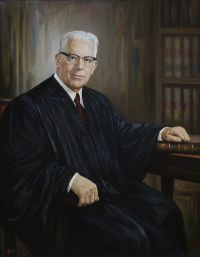
Portrait of Earl Warren Earl Warren Federal Power Commission v. Transcontinental Gas Pipe Line Corp National Coal Association… (1961)

No one disputes that natural gas is a wasting resource and that the necessity for conserving it is paramount. [3] As we see it, the question in this case is whether the Commission, through its certification power, may prevent the waste of gas committed to its jurisdiction. One apparent method of preventing waste of gas is to limit the uses to which it may be put, uses for which another, more abundant fuel may serve equally well.
Source: Wikisource

Portrait of Earl Warren Earl Warren Federal Power Commission v. Transcontinental Gas Pipe Line Corp National Coal Association… (1961)

There is no indication that the Federal Trade Commission or Congress was thinking in terms of state-controlled 'economic' conservation of gas committed to interstate commerce. Moreover, it is questionable whether any State could be expected to take the initiative in enforcing this type of 'economic' conservation. A producing State might wish to prolong its gas reserves for as long as possible but producing States have no control over the use to which gas is put in another State.
Source: Wikisource

Portrait of Earl Warren Earl Warren Federal Power Commission v. Transcontinental Gas Pipe Line Corp National Coal Association… (1961)

The Commission cannot order a natural gas company to sell gas to users that it favors; [12] it can only exercise a veto power over proposed transportation and it can only do this when a balance of all the circumstances weighs against certification. Moreover, the Commission has no authority over intrastate sales under any section of the Act and, since a large percentage of the gas sold for so-called 'inferior' uses is sold within the producing States, [13] this restriction further curtails the Commission's power over conservation.
Source: Wikisource

Get perspective with Kwize: daily news enlightened by great literature