Summary

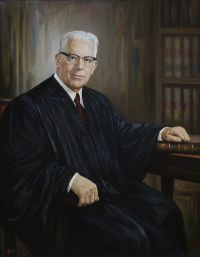
Portrait of Earl Warren Earl Warren Guss v. Utah Labor Relations Board…

It is hard to imagine that Congress meant to make the proviso the exclusive channel for state jurisdiction when so many States would be automatically excluded from using it. The full mission of the proviso was to supply the National Board with express authority to cede jurisdiction over labor disputes by agreement where, as a matter of deliberate judgment, it concluded that due regard for local interests made that course desirable. The Board's jurisdictional yardsticks always have reflected its need to distribute its limited resources so as best to effectuate the policies of the Act.
Source: Wikisource

Portrait of Earl Warren Earl Warren Guss v. Utah Labor Relations Board…

Since Congress' power in the area of commerce among the States is plenary, its judgment must be respected whatever policy objections there may be to creation of a no-man's-land.
Congress is free to change the situation at will. In 1954 the Senate Committee on Labor and Public Welfare recognized the existence of a no-man's-land and proposed an amendment which would have empowered state courts and agencies to act upon the National Board's declination of jurisdiction.
Source: Wikisource

Portrait of Earl Warren Earl Warren Guss v. Utah Labor Relations Board…

The Board does not 'cede' jurisdiction when it declines to exercise its full jurisdiction; it merely allows the States to exercise their pre-existing authority. [29]
The Court's interpretation of the proviso is contrary to the established practice of the States and of the National Board, as well as to the considered position taken by the Board as amicus curiae. Congress has demonstrated a continuing and deep interest in providing governmental machinery for handling labor controversies. The creation by it of a large, unsupervised no man's land flies in the face of that policy.
Source: Wikisource

Get perspective with Kwize: daily news enlightened by great literature