Summary

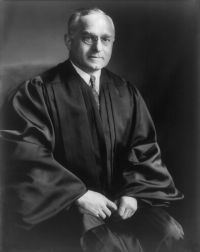
Portrait of Felix Frankfurter Felix Frankfurter Weber v. Anheuser-Busch — Opinion of the Court

But where the moving party itself alleges unfair labor practices, where the facts reasonably bring the controversy within the sections prohibiting these practices, and where the conduct, if not prohibited by the federal Act, may be reasonably deemed to come within the protection afforded by that Act, the state court must decline jurisdiction in deference to the tribunal which Congress has selected for determining such issues in the first instance.
Source: Wikisource

Portrait of Felix Frankfurter Felix Frankfurter Weber v. Anheuser-Busch — Opinion of the Court

While assuming that an unfair labor practice under the Taft-Hartley Act was involved, this Court sustained the state judgment on the theory that there was no compensatory relief under the federal Act and no federal administrative relief with which the state remedy conflicted.
We come, then, to the facts in this case.
Contrary to the assumption of the Missouri Supreme Court, the Board had not ruled that no unfair labor practice was involved in the conduct by the IAM of which respondent complained. The Board had determined only that there was no violation of Subsection (D) of § 8 (b) (4) .
Source: Wikisource

Portrait of Felix Frankfurter Felix Frankfurter Weber v. Anheuser-Busch — Opinion of the Court

Wisconsin Employment Relations Board, supra, the statute was directed at the preservation of public utility services and not at maintenance of sound labor relations, but the State's injunction was reversed. Controlling and therefore superseding federal power cannot be curtailed by the State even though the ground of intervention be different than that on which federal supremacy has been exercised.
By the Taft-Hartley Act, Congress did not exhaust the full sweep of legislative power over industrial relations given by the Commerce Clause.
Source: Wikisource

Get perspective with Kwize: daily news enlightened by great literature