Summary

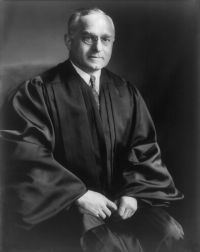
Portrait of Felix Frankfurter Felix Frankfurter American Federation of Labor v…

We are asked to sustain a decree which for purposes of this case asserts as the common law of a state that there can be no 'peaceful picketing or peaceful persuasion' in relation to any dispute between an employer and a trade union unless the employer's own employees are in controversy with him.
Such a ban of free communication is inconsistent with the guarantee of freedom of speech. That a state has ample power to regulate the local problems thrown up by modern industry and to preserve the peace is axiomatic.
Source: Wikisource

Portrait of Felix Frankfurter Felix Frankfurter American Federation of Labor v…

The scope of the Fourteenth Amendment is not confined by the notion of a particular state regarding the wise limits of an injunction in an industrial dispute, whether those limits be defined by statute or by the judicial organ of the state. A state cannot exclude workingmen from peacefully exercising the right of free communication by drawing the circle of economic competition between employers and workers so small as to contain only an employer and those directly employed by him. The interdependence of economic interest of all engaged in the same industry has become a commonplace.
Source: Wikisource

Portrait of Felix Frankfurter Felix Frankfurter American Federation of Labor v…

The right of free communication cannot therefore be mutilated by denying it to workers, in a dispute with an employer, even though they are not in his employ. Communication by such employees of the facts of a dispute, deemed by them to be relevant to their interests, can no more be barred because of concern for the economic interests against which they are seeking to enlist public opinion than could the utterance protected in Thornhill's case.
Source: Wikisource

Get perspective with Kwize: daily news enlightened by great literature