Summary

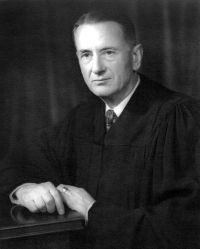
Portrait of Charles Evans Whittaker Charles Evans Whittaker Leedom v. Kyne — Opinion of the Court

The House proposal for direct review of Board certifications in the Taft-Hartley amendments was based in part upon the fact that, under the Wagner Act, the operation of § 9 (d) was 'unfair to * * * the union that loses, which has no appeal at all no matter how wrong the certification may be; (and to) the employees, who also have no appeal * * *.' [17] Congress nevertheless continued the limited judicial review provided by § 9 (d) because Congress believed the disadvantages of broader review to be more serious than the difficulties which limited review posed for the parties.
Source: Wikisource

Portrait of Charles Evans Whittaker Charles Evans Whittaker Leedom v. Kyne — Opinion of the Court

Even when the Board wins such a case on the merits, as in Inland Empire Council, while the case is dragging through the courts the threat will be ever present of the industrial strife sought to be averted by Congress in providing only drastically limited judicial review under § 9 (d) . Both union and management will be able to use the tactic of litigation to delay the initiation of collective bargaining when it suits their purposes. A striking example of this was recently disclosed to the Select Committee of the Senate on Improper Activities in the Labor or Management Field.
Source: Wikisource

Get perspective with Kwize: daily news enlightened by great literature