Summary

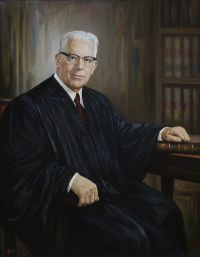
Portrait of Earl Warren Earl Warren Terry v. Ohio — Opinion of the Court

Having thus roughly sketched the perimeters of the constitutional debate over the limits on police investigative conduct in general and the background against which this case presents itself, we turn our attention to the quite narrow question posed by the facts before us: whether it is always unreasonable for a policeman to seize a person and subject him to a limited search for weapons unless there is probable cause for an arrest.
Source: Wikisource

Portrait of Earl Warren Earl Warren Terry v. Ohio — Opinion of the Court

The danger in the logic which proceeds upon distinctions between a 'stop' and an 'arrest,' or 'seizure' of the person, and between a 'frisk' and a 'search' is twofold. It seeks to isolate from constitutional scrutiny the initial stages of the contact between the policeman and the citizen. And by suggesting a rigid all-or-nothing model of justification and regulation under the Amendment, it obscures the utility of limitations upon the scope, as well as the initiation, of police action as a means of constitutional regulation.
Source: Wikisource

Portrait of Earl Warren Earl Warren Terry v. Ohio — Opinion of the Court

We must still consider, however, the nature and quality of the intrusion on individual rights which must be accepted if police officers are to be conceded the right to search for weapons in situations where probable cause to arrest for crime is lacking. Even a limited search of the outer clothing for weapons constitutes a severe, though brief, intrusion upon cherished personal security, and it must surely be an annoying, frightening, and perhaps humiliating experience.
Source: Wikisource

Get perspective with Kwize: daily news enlightened by great literature