Summary

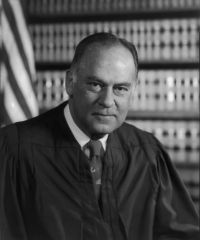
Portrait of Potter Stewart Potter Stewart Coolidge v. New Hampshire — Opinion of the Court

United States-no alerted criminal bent on flight, no fleeting opportunity on an open highway after a hazardous chase, no contraband or stolen goods or weapons, no confederates waiting to move the evidence, not even the inconvenience of a special police detail to guard the immobilized autobile. In short, by no possible stretch of the legal imagination can this be made into a case where 'it is not practicable to secure a warrant,' Carroll, supra, at 153, 45 S.Ct., at 285, and the 'automobile exception,' despite its label, is simply irrelevant.
Source: Wikisource

Portrait of Potter Stewart Potter Stewart Coolidge v. New Hampshire — Opinion of the Court

As against the minor peril to Fourth Amendment protections, there is a major gain in effective law enforcement. Where, once an otherwise lawful search is in progress, the police inadvertently come upon a piece of evidence, it would often be a needless inconvenience, and sometimes dangerous-to the evidence or to the police themselves-to require them to ignore it until they have obtained a warrant particularly describing it.
Source: Wikisource

Portrait of Potter Stewart Potter Stewart Coolidge v. New Hampshire — Opinion of the Court

If it is reasonable for the police to make a warrantless nighttime entry for the purpose of arresting a person in his bed, then surely it must be reasonable as well to make a warrantless entry to search for and seize vital evidence of a serious crime. If the police may, without a warrant, seize and search an unoccupied vehicle parked on the owner's private property, not being used for any illegal purpose, then it is hard to see why they need a warrant to seize and search a suitcase, a trunk, a shopping bag, or any other portable container in a house, garage, or back yard.
Source: Wikisource

Get perspective with Kwize: daily news enlightened by great literature