Summary

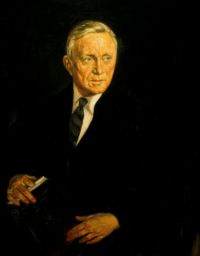
Portrait of William O. Douglas William O. Douglas Davis v. United States (328 U.S. 582…

The difference between demanding documents without legal process and seizing them on the basis of such process, is the difference between the protection of civil liberties and their invasion. The difference is the essence of the Fourth Amendment.
Indeed, so unhappy was the experience with police search for papers and articles 'in home or office,' Gouled v. United States, 255 U.S. 298, 308, 309, 41 S.Ct. 261, 264, 265, 65 L.Ed. 647, that it was once maintained that no search and seizure is valid.
Source: Wikisource

Portrait of William O. Douglas William O. Douglas Davis v. United States (328 U.S. 582…

Such was the contemporaneous construction of the Fourth Amendment by the Congress. It gave specific authorization whenever it wished to permit searches and seizures. Beginning with the first Congress down to 1917, Congress authorized search by warrant not as a generally available resource in aid of criminal prosecution but in the most restricted way, observing with a jealous eye the recurrence of evils with which our early statesmen were intimately familiar. For each concrete situation Congress deemed it necessary to pass a separate act.
Source: Wikisource

Portrait of William O. Douglas William O. Douglas Davis v. United States (328 U.S. 582…

I am constrained to believe that today's decision flows from a view of the Fourth Amendment that is unmindful of the history that begot it and of the purpose for which it was included in the Bill of Rights. And the view of the Amendment which the Court rejects is confirmed by an impressive body of the laws of Congress and of the decisions of this Court. Stern enforcement of the criminal law is the hallmark of a healthy and self-confident society.
Source: Wikisource

Get perspective with Kwize: daily news enlightened by great literature