Summary

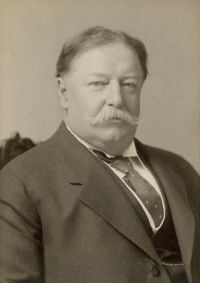
Portrait of William Howard Taft William Howard Taft Carroll v. United States (267 U.S. 132…

It is equally fundamental that a citizen may not be arrested on suspicion of having committed a misdemeanor and have his person searched by force, without a warrant of arrest. If, therefore, the arresting officer in this case had no other justification for the arrest than the mere suspicion that a bottle, only the neck of which he could see protruding from the pocket of defendant's coat, contained intoxicating liquor, then it would seem to follow without much question that the arrest and search, without first having secured a warrant, were illegal.
Source: Wikisource

Portrait of William Howard Taft William Howard Taft Carroll v. United States (267 U.S. 132…

On reason and authority the true rule is that if the search and seizure without a warrant are made upon probable cause, that is, upon a belief, reasonably arising out of circumstaces known to the seizing officer, that an automobile or other vehicle contains that which by law is subject to seizure and destruction, the search and seizure are valid. The Fourth Amendment is to be construed in the light of what was deemed an unreasonable search and seizure when it was adopted, and in a manner which will conserve public interests as well as the interests and rights of individual citizens.
Source: Wikisource

Portrait of William Howard Taft William Howard Taft Carroll v. United States (267 U.S. 132…

It is that although of course its seizure was an outrage which the government now regrets, it may study the papers before it returns them, copy them, and then may use the knowledge that it has gained to call upon the owners in a more regular form to produce them; that the protection of the Constitution covers the physical possession but not any advantages that the government can gain over the object of its pursuit by doing the forbidden act.
Source: Wikisource

Get perspective with Kwize: daily news enlightened by great literature