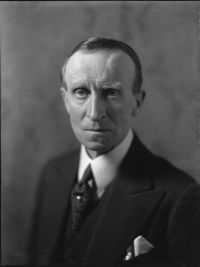
“ From the day you leave the Court you will be a suspected man. The police of all Europe will be on your trail. You have been highly successful in the past, and why? Because you have been above suspicion, an honourable and distinguished gentleman, belonging to the best clubs, counting as your acquaintances the flower of our society. Now you will be a suspect, a man with a past, a centre of strange stories. ”
Suspect
Definition and stakes
The concept of "suspect" intertwines legal examination and moral uncertainty, exemplified by the 1987 film Suspect, in which a deaf-mute man is wrongly accused, prompting a lawyer and juror to uncover the truth. This theme extends beyond cinema, as authors like John Buchan and Thomas Carlyle investigated the societal impact of doubt, while legal scholars such as Hugo Black explored its ethical limits.
Carolyn Wells criticized premature judgments, promoting concrete evidence over speculation. The film and these works together highlight how doubt connects justice and injustice, revealing the delicate boundary between proof and bias.
Quotes about “suspect”
 Arthur Somers Roche,
The Millionth Chance — Chapter 4
(1916)
Arthur Somers Roche,
The Millionth Chance — Chapter 4
(1916)
“ But one becomes tired of explanations. I saw no reason why I should offer another to people so ready to suspect me, and who themselves were under some cloud of suspicion that caused detectives to take undue interest in them. ”
Thomas Carlyle, The Works of Thomas Carlyle/Volume 4 (1896)
“ Nay Chaumette, illuminating the matter still further, in his Municipal Placards and Proclamations, will bring it about that you may almost recognise a Suspect on the streets, and clutch him there,—off to Committee and Prison. Watch well your words, watch well your looks: if Suspect of nothing else, you may grow, as came to be a saying, 'Suspect of being Suspect'! For are we not in a state of Revolution? ”
 Hugo Black,
Gilbert v. California (388 U.S. 263…
Hugo Black,
Gilbert v. California (388 U.S. 263…
“ It rests on the ground that compelling a suspect to submit to or engage in conduct the sole purpose of which is to supply evidence against himself nonetheless does not compel him tobe a witness against himself. ”
Hans Gross, Criminal Psychology: A Manual for Judges…
“ For us lawyers chance and the interpretation of it are of immense importance not only in bringing together evidence, but in every case of suspicion, for the problem always arises whether a causal{160} relation may be established between the crime and the suspect, or whether the relation is only accidental. ”
Hans Gross, Criminal Psychology: A Manual for Judges…
“ In such cases the judge’s task is easier than the witness’s, since he need not tell them of evidence already at hand. How very much people allow themselves to be influenced by antecedent grounds of suspicion is a matter of daily observation. One example will suffice. An intelligent man was attacked at night and wounded. On the basis of his description{37} an individual was arrested. On the next day the suspect was brought before the man for identification. ”
Various, Hooded Detective, Volume III No…
“ He batters the suspect with circumstantial evidence until in nine out of ten cases the scientific suspect weakens and acknowledges his crime. Circumstantial evidence backed by a confession that checks on all angles is about all any jury needs to be convinced of guilt. ”
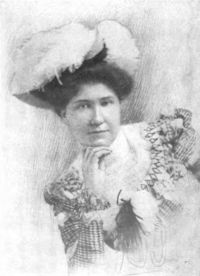 Carolyn Wells,
In the Onyx Lobby
Carolyn Wells,
In the Onyx Lobby
“ I don't care whether it's wise or not. You make me disgusted with detective work! Why do you go around sneaking up on any woman you can hear of? Why don't you go about it from the other side? Find a motive for the murder and then find the criminal who had the motive! Don't suspect this one because she studied nursing and that one because the old gentleman kissed her! It isn't a unique case, my uncle's fancy for chorus girls,—but it by no means indicates the result of murder! Get the weapon, then find its owner. Get a clue,—a real, material clue, and then trace the criminal. ”
 Thomas Adolphus Trollope,
A Siren
Thomas Adolphus Trollope,
A Siren
“ If you had committed murder—if I had committed murder,—should we not either of us, have denied it as resolutely as you denied this? If the circumstances are such as to cause a man—any man—to be suspected at all, no words of his can be worth anything whatsoever on the subject; and you must admit that, the circumstances being as they were, it was impossible that the first suspicion should not have fallen on you. ”
 Anna Katharine Green,
Hand and Ring
Anna Katharine Green,
Hand and Ring
“ Detective though he was and accustomed to the bravado with which every sort of criminal will turn to meet their fate when fully driven to bay, there had been something in the final manner of this desperate but evidently cultured gentleman, which had impressed him against his own will, and made him question whether the suspected man was not rather the victim of a series of extraordinary circumstances, than the selfish and brutal criminal which the evidence given seemed to suggest. ”
Anonymous, Charles Peace, or The Adventures of a Notorious Burglar
“ He came to the conclusion that Peace was innocent, and that he—the detective—was making a fool of himself.“There is no occasion for you to be out of temper, Peace, not the least occasion. Nobody suspects you.” ”
State Trials, Political and Social…
“ He then went on:—'My lord, I open my defence shortly, referring the particulars to the witnesses themselves, in calling those who will fully refute the suppositions and inferences made by the prosecutor, whom first, my lord, I shall begin with, to show there is no evidence of any murder at all committed; and this I say again, ought to be indisputably made manifest and proved, before any man can be so much as suspected for it. ”
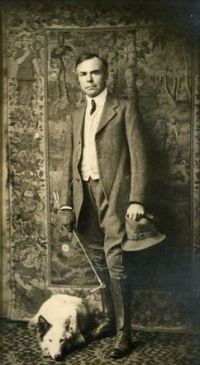 Melville Davisson Post,
The Rule-Ridden Game
(1915)
Melville Davisson Post,
The Rule-Ridden Game
(1915)
“ A man suspected of having committed a crime is the one person connected with the whole affair who is not required to explain his suspicious acts! Every innocent bystander is haled into court, put on the witness stand and grilled. The remote, intimate details of his life are gone into. He is insulted and flayed. His motives are questioned, and every event in his life that may be thought to affect his credibility as a witness is dragged into the open. And all this happens while the prisoner charged with the crime is not required to open his mouth about it. ”
François de La Rochefoucauld, Reflections; or Sentences and Moral Maxims (1665)
“ XXXVII.—Those who are incapable of committing great crimes do not easily suspect others. ”
 Ben Hecht,
The Florentine Dagger: A Novel for Amateur Detectives
Ben Hecht,
The Florentine Dagger: A Novel for Amateur Detectives
“ A desire to test one’s immunity to detection by mingling with people under the noses of the very police looking for one. Also a feeling of insecurity. Yes, a criminal would feel the suspense of insecurity, and in order to make certain that he was as yet not suspected he might seek out the presence of his pursuers. As for the scene of the crime idea itself, a crime which created a sense of satisfaction in its perpetrator might lure him to enjoy its memory more vividly by a return to the scene. ”
 Arthur Machen,
The Three Impostors; or, The Transmutations
Arthur Machen,
The Three Impostors; or, The Transmutations
“ I was so fortunate as to succeed. I assumed this disguise, and for some time have lain snug and unsuspected. But of late I have reason to believe that the pursuer is on my track; unless I am greatly deceived, I saw yesterday the detective who is charged with the odious duty of observing my movements. ”
William Shuler Harris, Life in a Thousand Worlds (1905)
“ I was much amazed at the construction and possibilities of the human mind when I observed the manner in which certain suspected criminals were examined in order to prove or disprove the crime of which they were charged. ”
 Henry Charles Lea,
Superstition and Force
Henry Charles Lea,
Superstition and Force
“ Sometimes, as in others, suspects were brought, under judicial order, to view or touch the body. Frequently, however, the occurrence is spontaneous, and serves to excite or direct suspicion where none existed before. ”
Hans Gross, Criminal Psychology: A Manual for Judges…
“ It very frequently happens that suspects, especially those under arrest, alter completely in the course of time, become sullen, coarse, passionate, ill-natured, show themselves defiant and resentful to even the best-willed approach, and exhibit even a kind of courage in not offering any defense and in keeping silent. ”
 Allan Pinkerton,
Bucholz and the Detectives
Allan Pinkerton,
Bucholz and the Detectives
“ Leaving the young man in the distressing position of a suspected criminal, and deprived of his liberty, let us retrace our steps, and gather up some links in the chain of the testimony against him, which were procured during the days that intervened between the night of the murder and the day of his commitment. ”
W. H. Sparks, The Memories of Fifty Years
“ To be suspected was to be arrested, and to be arrested was wellnigh equivalent to being executed—sometimes with the mockery of a trial, and, where evidence was wanting to fix suspicion, even by drum-head court-martial. ”
 John Masefield,
Jim Davis — Chapter XIX: The Road to London
(1911)
John Masefield,
Jim Davis — Chapter XIX: The Road to London
(1911)
“ Now somewhere I had read that the police bullied suspected persons in this way. If you make a guilty person believe that you know him to be guilty, you can also get him to confess if you startle him sufficiently. ”
 Henry David Thoreau,
A Week on the Concord and Merrimack Rivers
(1849)
Henry David Thoreau,
A Week on the Concord and Merrimack Rivers
(1849)
“ There is no rule more invariable than that we are paid for our suspicions by finding what we suspected. ”
 Charles Dickens,
A Tale of Two Cities
(1859)
Charles Dickens,
A Tale of Two Cities
(1859)
“ a law of the Suspected, which struck away all security for liberty or life, and delivered over any good and innocent person to any bad and guilty one; prisons gorged with people who had committed no offence, and could obtain no hearing; ”
 Joseph Conrad,
The Secret Agent
(1907)
Joseph Conrad,
The Secret Agent
(1907)
“ Nobody looked at him. He passed on unsuspected and deadly, like a pest in the street full of men. ”
D. J. Cook, Hands Up; or, Thirty-Five Years of Detective Life in the Mountains and on the Plains
“ The revelation of the crime, the obscurity of the victims, the length of time elapsing between the perpetration and the discovery, the mystery enveloping the deed with an apparently impregnable mantle, and the swift following detection and apprehension of the perpetrators, all combine to form the basis for one of the most interesting narratives ever found in criminal or detective literature. ”
John Dickson Carr, The Haverfordian (1929)
“ And your psychological detective wants to pick out the kind of man who committed a crime; after which he hunts around till he finds one and says, ‘Behold the murderer,’ whether the evidence supports him or not. I hope you'll permit me to say damned nonsense. There is no man who is incapable of a crime under any circumstances; to say that a daring crime was necessarily committed by a daring person is to argue that a drunken author can write on the subject of nothing but liquor, or that an atheistical artist could not paint the Crucifixion. ”
 B. L. Farjeon,
The Betrayal of John Fordham
B. L. Farjeon,
The Betrayal of John Fordham
“ A dozen witnesses have sworn to the identity of a man who was being tried for a crime of which he was as innocent as I am, have sworn to his voice, to the color of his eyes and hair, to secret marks upon his person, to a missing tooth, to the peculiar shape of his fingers, and he has been condemned upon their evidence. ”
 Maurice Leblanc,
The Teeth of the Tiger — Chapter XIV. The "Hater"
(1921)
Maurice Leblanc,
The Teeth of the Tiger — Chapter XIV. The "Hater"
(1921)
“ When you know the secret of the letters, the truth is much nearer than you think; and you would have already named the criminal if the horror of his crime had not been so great as to divert all suspicion from him. ”
 Gilbert Keith Chesterton,
The Man Who Was Thursday
(1908)
Gilbert Keith Chesterton,
The Man Who Was Thursday
(1908)
“ The ordinary detective goes to pot-houses to arrest thieves; we go to artistic tea-parties to detect pessimists. The ordinary detective discovers from a ledger or a diary that a crime has been committed. We discover from a book of sonnets that a crime will be committed. We have to trace the origin of those dreadful thoughts that drive men on at last to intellectual fanaticism and intellectual crime. ”
George S. McWatters, Knots Untied; Or, Ways and By-ways in the Hidden Life of American Detectives
“ The detective has one palliative to his conscience which the criminal and thief—be he a regular or irregular one, a business man with a shop, or without one—has not; for he, in his trickeries, his lies, his false seeming, his unscrupulous betrayal of his victims, has ever the consciousness that he is operating as an aid to justice, and that in her cause is it that he commits whatever outrages he may do to truth and fair dealing. ”
Anna Katharine Green,
Hand and Ring
“ On whom are you going to lay your hand in suspicion? On the stranger, of course—the rough-looking tramp that everybody thinks is ready for bloodshed at the least provocation. But suspicion is not conviction, and I would dare wager that no court, in face of a persistent denial on his part that he even saw the old woman when he went to her door, would bring in a verdict of murder against him, even though silver from her private drawer were found concealed upon his person. ”
Melville Davisson Post,
Uncle Abner: Master of Mysteries
(1918)
“ It is possible, of course, that a criminal agent may plan his crime with skill, execute it without accident, and maintain the secret with equanimity, and that all interrogation following upon his act, will be wholly futile ”
Anna Katharine Green,
The House of the Whispering Pines
“ So much for the situation as it appears to outsiders. Of the circumstantial evidence which links you personally to this crime, we have already spoken. It is very strong and apparently unassailable. But truth is truth, and if you only felt free to bare your whole soul to me as you now decline to do, I should not despair of finding some weak link in the chain which seems so satisfactory to the police and, I am forced to add, to the general public. ”

“ Another conspiracy! A conspiracy to depose me! And my private detective was so convulsed with laughter at the notion of a conspirator selecting him for a confidant that he was physically unable to arrest the malefactor! Why, it'll come off! This comes of engaging a detective with a keen sense of the ridiculous! For the future I'll employ none but Scotchmen. And the plot is to explode to-morrow! My wedding day! ”
 Emma Dorothy Eliza Nevitte Southworth,
The Lost Lady of Lone
Emma Dorothy Eliza Nevitte Southworth,
The Lost Lady of Lone
“ I must commence the search abroad at once. I shall go immediately to a skillful detective, whom I know from reputation, and put the case in his hands. What seems to us so alarming and incomprehensible, may be to a man of his experience simple and clear enough. We are too near the fact to see it truly in its proper light. This man I understand to be faithful and discreet, one who may be intrusted with the investigation of the most delicate affairs. ”
Baroness Emmuska Orczy Orczy, Unravelled Knots (1923)
“ I have watched the police committing one blunder after another, and to-day, when they are completely baffled and the public has started to write letters to the papers about another undetected crime and another criminal at large, I am having the time of my life. ”
 L. Frank Baum,
Mary Louise in the Country — XIX. GOOD MONEY FOR BAD
(1916)
L. Frank Baum,
Mary Louise in the Country — XIX. GOOD MONEY FOR BAD
(1916)
“ I thought, at first, it might be a simple murder case; simple, because the commonest people commit murder, and to the detective the deed is more revolting than exciting. But we may dismiss the murder suspicion entirely. ”
 Marie Belloc Lowndes,
The Terriford mystery
(1924)
Marie Belloc Lowndes,
The Terriford mystery
(1924)
“ Twenty years of hard work in the Criminal Investigation Department had proved to him that where there is no motive there is no murder, and if this be true of an ordinary, sordid crime, how much more true when a secret poisoner is in question! ”
 A. E. W. Mason,
The House of the Arrow
(1924)
A. E. W. Mason,
The House of the Arrow
(1924)
“ A cruel murder has been secretly committed and suddenly the murderess has to listen to a true account of that murder in the presence of the detective who is there to fix the guilt! There was some one at hand all the time—almost an eye-witness—perhaps an actual eye-witness. ”
 Mary Elizabeth Braddon,
The Trail of the Serpent
(1890)
Mary Elizabeth Braddon,
The Trail of the Serpent
(1890)
“ Suspicion, gentlemen of the jury, only points to one man; and to that man suspicion points with so unerring a finger, that the criminal stands revealed in the broad glare of detected guilt. That man is the prisoner at the bar. On the discovery of the murder, the returned wanderer, the penitent and dutiful son, was of course sought for. ”
 Henry Johnson Brent,
Was it a ghost? The murders in Bussey's wood
(1868)
Henry Johnson Brent,
Was it a ghost? The murders in Bussey's wood
(1868)
“ The criminals engaged in the perpetration of a crime could, if such testimony was of any judicial weight, arrange a circle, produce the manifestations, or the similitude of manifestations, and direct attention to certain innocent parties, when suspicion would give time for the real culprits to escape. ”
Allan Pinkerton,
Bucholz and the Detectives
“ The following pages narrate a story of detective experience, which, in many respects, is alike peculiar and interesting, and one which evinces in a marked degree the correctness of one of the cardinal principles of my detective system, viz.: "That crime can and must be detected by the pure and honest heart obtaining a controlling power over that of the criminal." ”
C. N. Williamson and A. M. Williamson, The Brightener — Chapter 4 (1921)
“ In other days, when a man stared or turned to gaze after me, I had attributed the attention to my looks; now I jumped to the conviction that he was a detective. And, in fact, I began to jump at anything. ”
Francis Worcester Doughty, Shadow, the Mysterious Detective… (1883)
“ More than once the secret listener shuddered on hearing the tales that were told.It seemed to him as if all the crimes that were ever committed could not sum up as large a total as these men boasted of having committed. ”
 Percy Hetherington Fitzgerald,
All the Year Round
(1869)
Percy Hetherington Fitzgerald,
All the Year Round
(1869)
“ I look at the man on thee high stool behind, who is the detective, and whose duty it is to watch and measure and pay, and, above all, support his understrappers with the air of a sort of disinterested bystander, who must interfere, at the last moment, with his impartial testimony. ”
C. T. Russell, Studies in the Scriptures, Volume 7…
“ He may swear that he knows nothing, when he knows that the person who committed the crime committed it without malice; or if he knows the crime, but secretly, and there has been no scandal. When a crime has been well concealed, the witness and even the criminal, may and even must, swear that the crime has never been committed. ”
