Summary

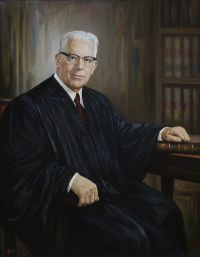
Portrait of Earl Warren Earl Warren United States v. Brown (381 U.S. 437…

The Bill of Attainder Clause was regarded as such a barrier. Alexander Hamilton wrote:
'Nothing is more common than for a free people, in times of heat and violence, to gratify momentary passions, by letting into the government principles and precedents which afterwards prove fatal to themselves. Of this kind is the doctrine of disqualification, disfranchisement, and banishment by acts of the legislature. The dangerous consequences of this power are manifest.
Source: Wikisource

Portrait of Earl Warren Earl Warren United States v. Brown (381 U.S. 437…

If the legislature can disfranchise any number of citizens at pleasure by general descriptions, it may soon confine all the votes to a small number of partisans, and establish an aristocracy or an oligarchy; if it may banish at discretion all those whom particular circumstances render obnoxious, without hearing or trial, no man can be safe, nor know when he may be the innocent victim of a prevailing faction.
Source: Wikisource

Portrait of Earl Warren Earl Warren United States v. Brown (381 U.S. 437…

It would be archaic to limit the definition of 'punishment' to 'retribution.' Punishment serves several purposes; retributive, rehabilitative, deterrent-and preventive. One of the reasons society imprisons those convicted of crimes is to keep them from inflicting future harm, but that does not make imprisonment any the less punishment.
Historical considerations by no means compel restriction of the bill of attainder ban to instances of retribution.
Source: Wikisource

Get perspective with Kwize: daily news enlightened by great literature