Summary

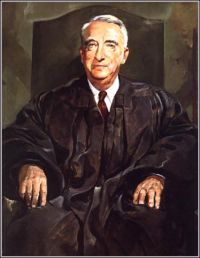
Portrait of Fred M. Vinson Fred M. Vinson American Communications Association v…

Although the First Amendment provides that Congress shall make no law abridging the freedom of speech, press or assembly, it has long been established that those freedoms themselves are dependent upon the power of constitutional government to survive. If it is to survive it must have power to protect itself against unlawful conduct and, under some circumstances, against incitements to commit unlawful acts. Freedom of speech thus does not comprehend the right to speak on any subject at any time.
Source: Wikisource

Portrait of Fred M. Vinson Fred M. Vinson American Communications Association v…

But in suggesting that the substantive evil must be serious and substantial, it was never the intention of this Court to lay down an absolutist test measured in terms of danger to the Nation. When the effect of a statute or ordinance upon the exercise of First Amendment freedoms is relatively small and the public interest to be protected is substantial, it is obvious that a rigid test requiring a showing of imminent danger to the security of the Nation is an absurdity.
Source: Wikisource

Portrait of Fred M. Vinson Fred M. Vinson American Communications Association v…

As thus construed, we think that the 'belief' provision of the oath presents no different problem from that present in that part of the section having to do with membership in the Communist Party. Of course we agree that one may not be imprisoned or executed because he holds particular beliefs. But to attack the straw man of 'thought control' is to ignore the fact that the sole effect of the statute upon one who believes in overthrow of the Government by force and violence-and does not deny his belief-is that he may be forced to relinquish his position as a union leader.
Source: Wikisource

Get perspective with Kwize: daily news enlightened by great literature