Summary

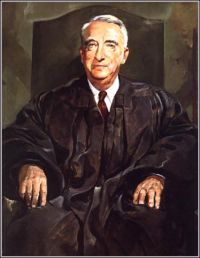
Portrait of Fred M. Vinson Fred M. Vinson Dennis v. United States — Opinion of the Court

Whatever theoretical merit there may be to the argument that there is a "right" to rebellion against dictatorial governments is without force where the existing structure of the government provides for peaceful and orderly change. We reject any principle of governmental helplessness in the face of preparation for revolution, which principle, carried to its logical conclusion, must lead to anarchy. No one could conceive that it is not within the power of Congress to prohibit acts intended to overthrow the Government by force and violence.
Source: Wikisource

Portrait of Fred M. Vinson Fred M. Vinson Dennis v. United States — Opinion of the Court

I do not doubt for a moment that, by the same reasoning that would justify punishing persuasion to murder, the United States constitutionally may punish speech that produces or is intended to produce a clear and imminent danger that it will bring about forthwith certain substantive evils that the United States constitutionally may seek to prevent.
Source: Wikisource

Portrait of Fred M. Vinson Fred M. Vinson Dennis v. United States — Opinion of the Court

Where the statute as construed by the state court transgressed the First Amendment, we could not but invalidate the judgments of conviction.
The very language of the Smith Act negates the interpretation which petitioners would have us impose on that Act. It is directed at advocacy, not discussion. Thus, the trial judge properly charged the jury that they could not convict if they found that petitioners did "no more than pursue peaceful studies and discussions or teaching and advocacy in the realm of ideas."
Source: Wikisource

Get perspective with Kwize: daily news enlightened by great literature