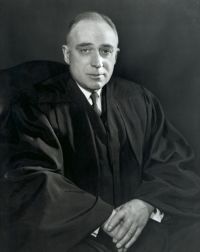
John Marshall Harlan II

John Marshall Harlan II

Summary

Portrait of John Marshall Harlan II John Marshall Harlan II Yates v. United States (354 U.S. 298… (1957)

The kind of advocacy and teaching which is charged and upon which your verdict must be reached is not merely a desirability, but a necessity that the Government of the United States be overthrown and destroyed by force and violence, and not merely a propriety, but a duty to overthrow and destroy the Government of the United States by force and violence.
Source: Wikisource

Portrait of John Marshall Harlan II John Marshall Harlan II Yates v. United States (354 U.S. 298… (1957)

They have the right also to criticize the foreign policy of the United States and the role being played by this country in international affairs, and to praise the foreign policy of other governments and the role being played by those governments in international affairs. The right of the defendants to enjoy such freedom of expression is unaffected by whether or not the opinions spoken or published may seem to you to be crudely intemperate, or to contain falsehoods, or to be designed to embarrass the Government.
Source: Wikisource

Portrait of John Marshall Harlan II John Marshall Harlan II Yates v. United States (354 U.S. 298… (1957)

We recognize that distinctions between advocacy or teaching of abstract doctrines, with evil intent, and that which is directed to stirring people to action, are often subtle and difficult to grasp, for, in a broad sense, as Mr. Justice Holmes said in his dissenting opinion in Gitlow, [p327] supra, 268 U.S. at 673: "Every idea is an incitement." But the very subtlety of these distinctions required the most clear and explicit instructions with reference to them, for they concerned an issue which went to the very heart of the charges against these petitioners.
Source: Wikisource

Get perspective with Kwize: daily news enlightened by great literature