Summary

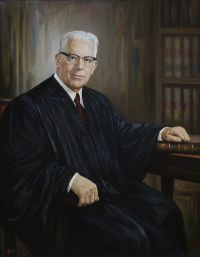
Portrait of Earl Warren Earl Warren United States v. Muniz — Opinion of the Court

Finally, having decided that discipline in the federal prisons will not be so seriously impaired that all recovery should be denied for negligently inflicted injuries, we should not at the same time make recovery depend upon a State's decision to the contrary. [27]
The Federal Tort Claims Act provides much-needed relief to those suffering injury from the negligence of government employees. We should not, at the same time that state courts are striving to mitigate the hardships caused by sovereign immunity, [28] narrow the remedies provided by Congress.
Source: Wikisource

Portrait of Earl Warren Earl Warren United States v. Muniz — Opinion of the Court

Without more definite indication of the risks of harm from diversity, we conclude that the prison system will not be disrupted by the application of Connecticut law in one case and Indiana law in another to decide whether the Government should be liable to a prisoner for the negligence of its employees. Finally, though the Government expresses some concern that the nonuniform right to recover will prejudice prisoners, it nonetheless seems clear that no recovery would prejudice them even more.
Source: Wikisource

Portrait of Earl Warren Earl Warren United States v. Muniz — Opinion of the Court

United States, that a soldier could not sue under the Federal Tort Claims Act for injuries which 'arise out of or are in the course of activity incident to service.' 340 U.S., at 146, 71 S.Ct., at 159. Among the principal reasons articulated for doing so were: (1) the absence of an analogous or parallel liability, on the part of either an individual or a State; no individual has power to mobilize a militia, no State had been held liable to its militiamen; (2) the presence of a comprehensive compensation system for service personnel; (3) the dearth of private bills from the military
Source: Wikisource

Get perspective with Kwize: daily news enlightened by great literature